Dartmoor · West Dartmoor
Peter Tavy
A peaceful granite village beneath the western flank of Dartmoor.
About
Peter Tavy
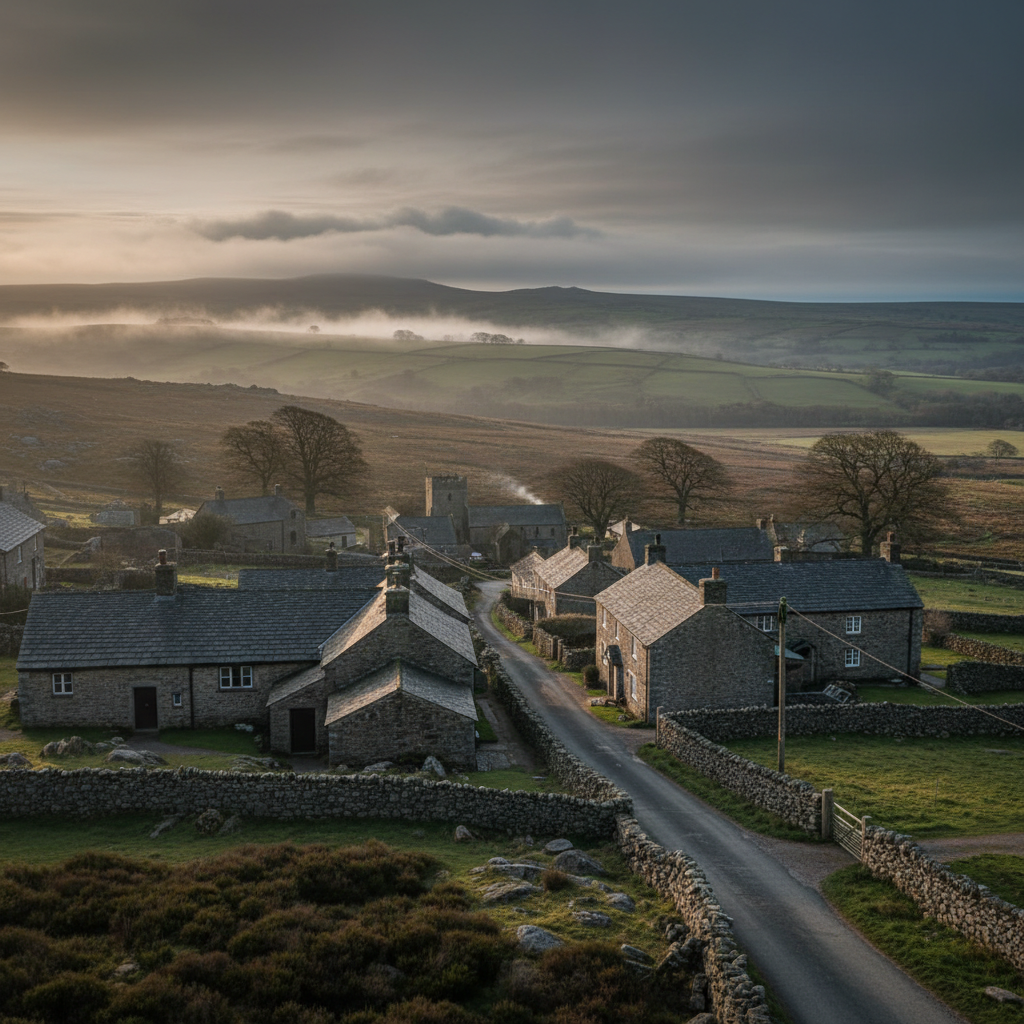
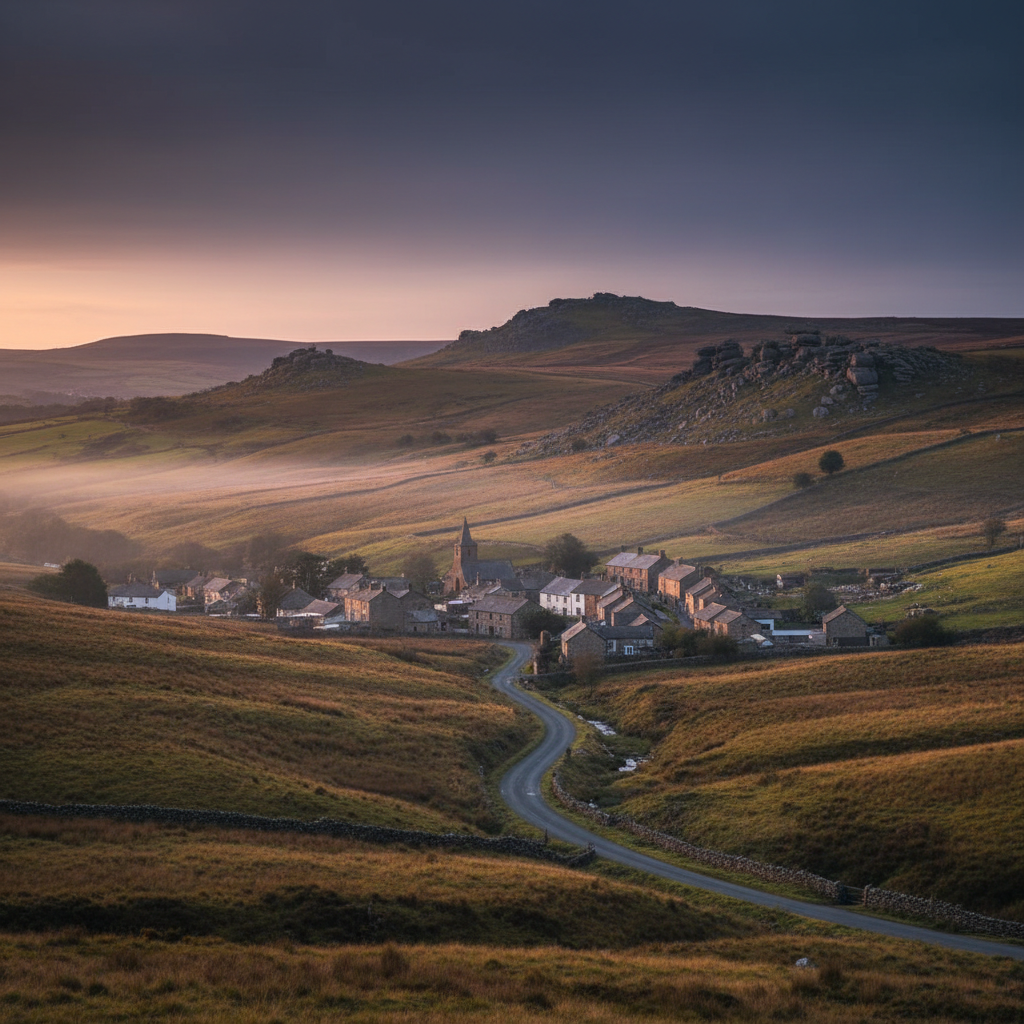
Peter Tavy sits at the western edge of Dartmoor, close enough to the high moor to feel its weight but settled enough to retain the unhurried rhythms of a working village. The road that brings you in drops through a shallow valley, past hedged fields and granite walls, before the village proper gathers around its church and green. There is no performance here, no apparatus of tourism. What you find instead is a place that has always had its own reasons for existing.
The land around Peter Tavy has been farmed for a long time. Evidence of early settlement is woven into the field boundaries and the shape of the lanes, which follow older logic than modern convenience would dictate. Cattle still graze on the moorland fringe, and the farms at the village's edge are working operations rather than conversions. That continuity gives Peter Tavy a groundedness that many villages in the national park have gradually lost as second homes and holiday lets have come to outnumber permanent residents.
The River Tavy runs nearby, giving the village both its name and a steady presence in the landscape. The sound of moving water carries on still evenings, and the river's wooded corridor provides a natural boundary between the enclosed farmland and the open ground rising to the east. It is this transition, from the domesticated to the elemental, that gives Peter Tavy much of its character as a place to both visit and linger in.
People come here for several reasons: to walk the western tor routes that fan out from the village, to visit the pub, or simply to use Peter Tavy as a base for quieter exploration of a part of Dartmoor that the main visitor honeypots rarely reach. The village rewards those who arrive without a fixed plan and take time to notice what is actually here.
Character
The feel of Peter Tavy
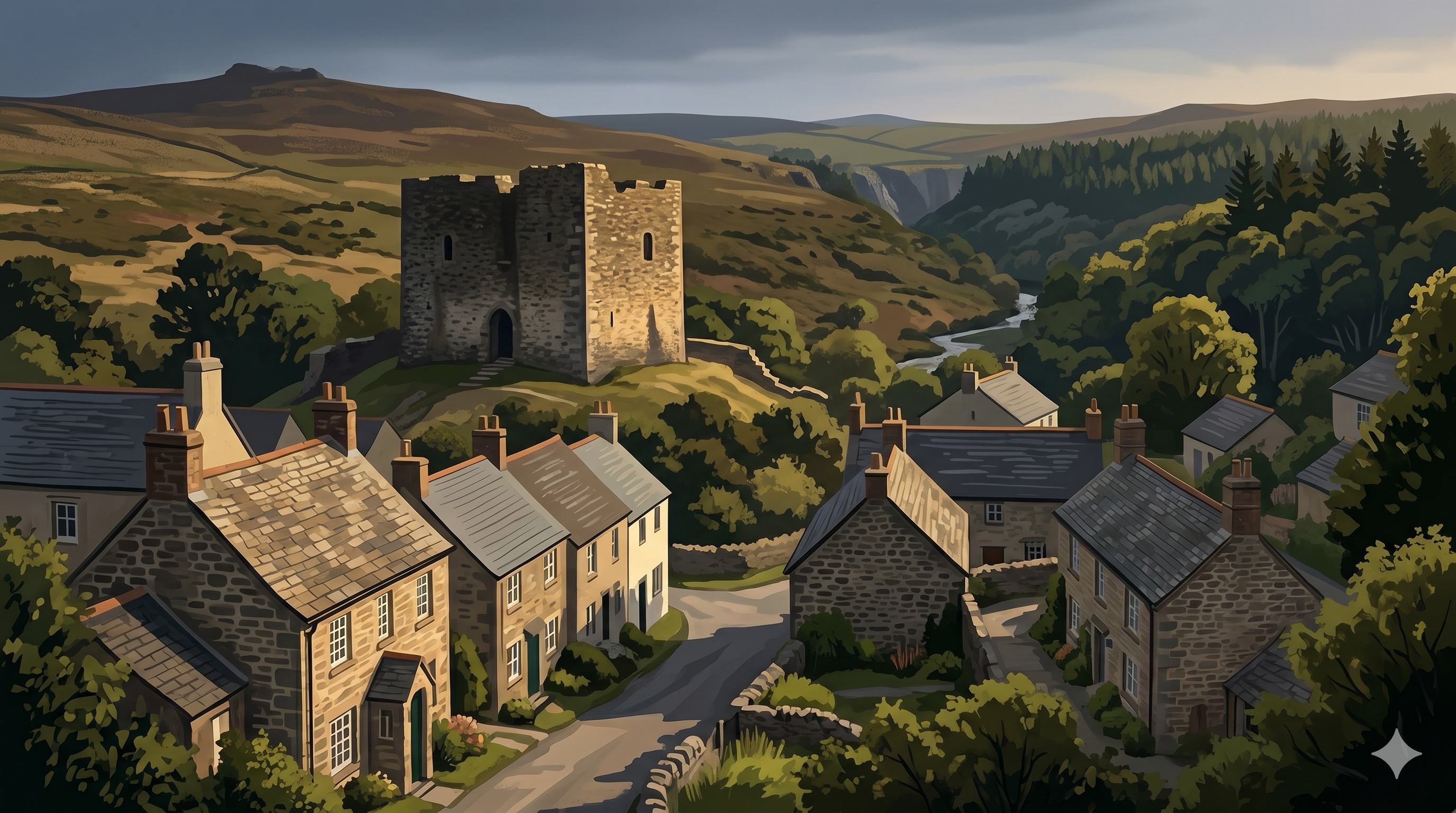
The built fabric of Peter Tavy is compact and consistent in its materials: granite predominates, in walls, window surrounds, and gate posts, giving the village a tonal unity that feels earned rather than curated. The church of St Peter stands at the centre of things, a medieval structure with a low, solid tower that seems to settle into the ground rather than aspire skyward. Around it, a modest collection of cottages and farm buildings occupies the space without crowding it. There is room to breathe between things here.
What defines the village most precisely is not what is present but what is absent. There is no gift shop, no tea room arranged for passing trade, no signs directing you toward a car park. The stillness this produces is not accidental. Peter Tavy has the quality of a place that has not been organised for anyone's arrival, which means that when you do arrive, you are simply present in someone else's ordinary life. That condition, increasingly rare in accessible parts of the national park, is itself the main attraction for those who seek it.
The Peter Tavy Inn sits at the heart of the village and functions as a genuine local pub as much as a walkers' destination. On a weekday lunchtime, particularly out of season, the balance tilts toward the former. Conversations at the bar are about fields and fences and local planning matters. This is not the performed rusticity of a moorland theme pub but the actual, slightly worn texture of a community gathering point that has been in continuous use for a long time.
Map & Getting Here
Getting to Peter Tavy
What to expect
A natural way to spend time here
Peter Tavy takes very little time to navigate on foot. The village is small enough that a slow circuit of its lanes, past the church, around the back of the green, and down toward the river, takes perhaps twenty minutes. The scale makes it easy to miss things if you move at road speed. On foot, at a patient pace, you begin to notice the details that give the place its texture: the lichen on the churchyard wall, the way the granite gate posts have been worn smooth at hand height, the unexpected depth of a farmyard glimpsed through an open gate.
In the right conditions, the soundscape of Peter Tavy is one of its more distinctive qualities. On a still morning in spring, the village holds birdsong in a way that feels amplified by the surrounding stone. Rooks work the elms near the church. From the lane toward the moor, you can hear the river below before you see it. In summer these sounds are layered with bees working the verge flowers and, occasionally, the low machinery of nearby farm work.
The most rewarding approach is to park once and not move the car again. Walk to the pub, walk to the church, walk out toward the moor, and come back on a different route. The village repays this kind of slow, looping attention far more than a purposeful march toward a specific destination. Those who allow themselves to be briefly undirected here will find the place opens up more than its modest proportions initially suggest.
What makes it stand out
What makes Peter Tavy special
What separates Peter Tavy from other small Dartmoor villages of comparable size is its position at the threshold between two very different landscapes. To the west, the enclosed farmland of the Tamar watershed feels almost Cornish in its intimacy, with narrow lanes and deep hedgebanks. To the east, the open moor begins almost without transition, and within twenty minutes on foot you are on ground with long sightlines and no field boundaries. Few villages in the national park offer such a clean shift between these two registers.
The village also sits within reach of western tor country that sees a fraction of the footfall that Haytor, Hound Tor, or even Brentor attract. Brat Tor, Cox Tor, and the approaches to Great Staple Tor are all accessible from Peter Tavy on routes that pass through genuinely uncrowded terrain. This matters not as a boast about secret locations but as a practical fact about the quality of the walking experience available here. The paths are clear, the ground is often firm by moorland standards, and there is space to stop and think without negotiating a crowd.
Don't miss
Things to see and do
Step inside St Peter's Church and let your eyes adjust to the light filtering through the old glass
the proportions of the nave are worth a few minutes of quiet attention.
Walk east from the village until the enclosed fields give way to open ground, and notice the exact moment the sky changes proportion above you.
Follow the lane toward the River Tavy on a clear morning, when the water is audible from a distance and the wooded corridor holds the mist a little longer than the fields on either side.
Sit at the Peter Tavy Inn for a midweek lunch in autumn, when the bar settles into its local rather than visitor mode and the conversation is entirely unperformed.
Take the route up toward Brat Tor and find the small enclosure of Widgery Cross on the summit ridge
the view back across the Tavy valley toward the Cornish hills is unlike anything on the eastern moor.
Scan the upper branches of the elms near the churchyard for rooks, which work the treetops with notable persistence through the spring months.
Walks from here
Getting out from Peter Tavy
The most direct walking route from Peter Tavy heads east along the lane before rising onto open moorland toward Cox Tor, a relatively short ascent that delivers wide views across the Tamar valley to the west and the higher central moor to the east. The ground is firm for much of the year on this approach, and the route can be extended north toward Great Staple Tor or south toward Pew Tor to create circuits of varying length, all returning comfortably to the village within a half or full day.
Northward from the village, the route toward Brat Tor and Widgery Cross follows the moorland edge through terrain that stays relatively sheltered below the ridge. This walk involves some wet ground in the lower sections, particularly after prolonged rainfall, but the upper ground is drier and the views across to Yes Tor and the high northern moor are extensive. The return can be varied by dropping back down through the Tavy valley, following the river south before cutting back up to the village through the lower fields.
For shorter walks, the river corridor itself offers a linear route of an hour or so in either direction, passing through mixed woodland and across sections of open bank. Downstream toward Tavistock, the path is well-worn and easy to follow. Upstream, the character becomes more elemental as the valley narrows and the moor closes in on both sides. Neither route demands particular navigation skill, which makes them well suited to those visiting the area without specialist kit or experience of open moorland.
Good to know
Before you go
The Peter Tavy Inn has limited opening hours and does not operate seven days a week year-round
it is worth checking ahead if a meal or a drink is part of the plan, particularly in winter months. Parking in the village is informal and limited. The best approach is to use the small spaces near the church or the pub and accept that the car may need to be repositioned if you have arrived during a busy weekend period.
Mobile phone signal in the village and on the adjacent moor is unreliable and should not be depended upon for navigation or emergency communication. The western tor routes are generally clear and well-used, but conditions on the open ground above the village can shift quickly in poor weather. Carrying a paper map and a compass remains sensible practice on any route that takes you above the moorland boundary, even on routes that are familiar in fine conditions.
Across the seasons: Peter Tavy changes most noticeably between October and March, when the visitor traffic that reaches even the quieter parts of Dartmoor thins to almost nothing and the village reverts entirely to its own pace. The late October bracken on the surrounding hillsides turns from green to a deep copper-orange that holds its colour for several weeks, and the low autumn light on the granite gives the walls a warmth they lack at other times of year. This is arguably the period in which the village shows its real character most clearly, unmediated by summer footfall. Spring brings the rooks back into full voice around the churchyard trees, and the river runs higher and louder through April after the winter rainfall. The moorland above the village greens slowly from a distance, though the ground at the edges remains boggy well into May in wet years. Walking conditions on the open ground improve markedly from late May onward, and the longer days allow for evening walks out toward the tors that are not possible in the shorter months. Summer weekends can bring a modest but noticeable increase in visitor numbers to the pub and the car parking areas near the church, though nothing on the scale of the eastern honeypots. Those hoping to experience the village at its most characteristically itself are better served by a Tuesday or Wednesday visit in June or September than by a Saturday in August.
Practical info
Practical info
Parking in Peter Tavy is limited and informal. There is a small area near the village centre, but it is shared with residents and fills quickly during busier periods. There are no designated visitor car parks, so arriving early is advisable. Please avoid blocking field gates or narrow lanes, which are in working agricultural use.
Peter Tavy has a pub, the Peter Tavy Inn, which serves food and drink and is the village's main public facility. There are no public toilets, no visitor centre, and no shop within the village itself. Those planning a full day on the western moor should bring everything they need before arriving.
The village sits at the edge of open moorland, so conditions change quickly as you move away from the lanes. Village paths and verges are generally manageable underfoot, but routes heading onto the moor above become rough and boggy after rain. Sturdy waterproof footwear is strongly recommended for anything beyond the village itself. Gradients on the approaches to nearby tors are moderate but sustained.
varies
Explore nearby
Places nearby
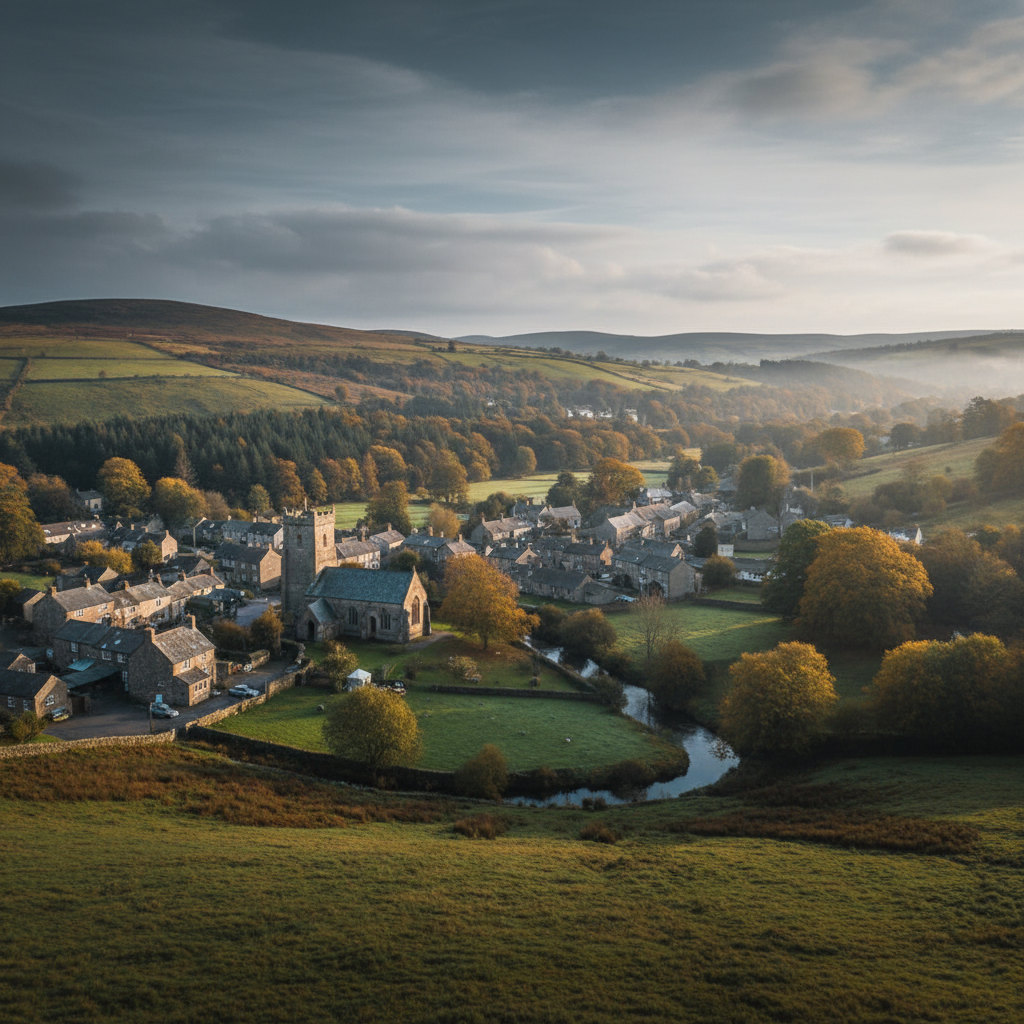
Buckland Monachorum
Buckland Monachorum combines rural calm with excellent access to moor-edge landscapes.
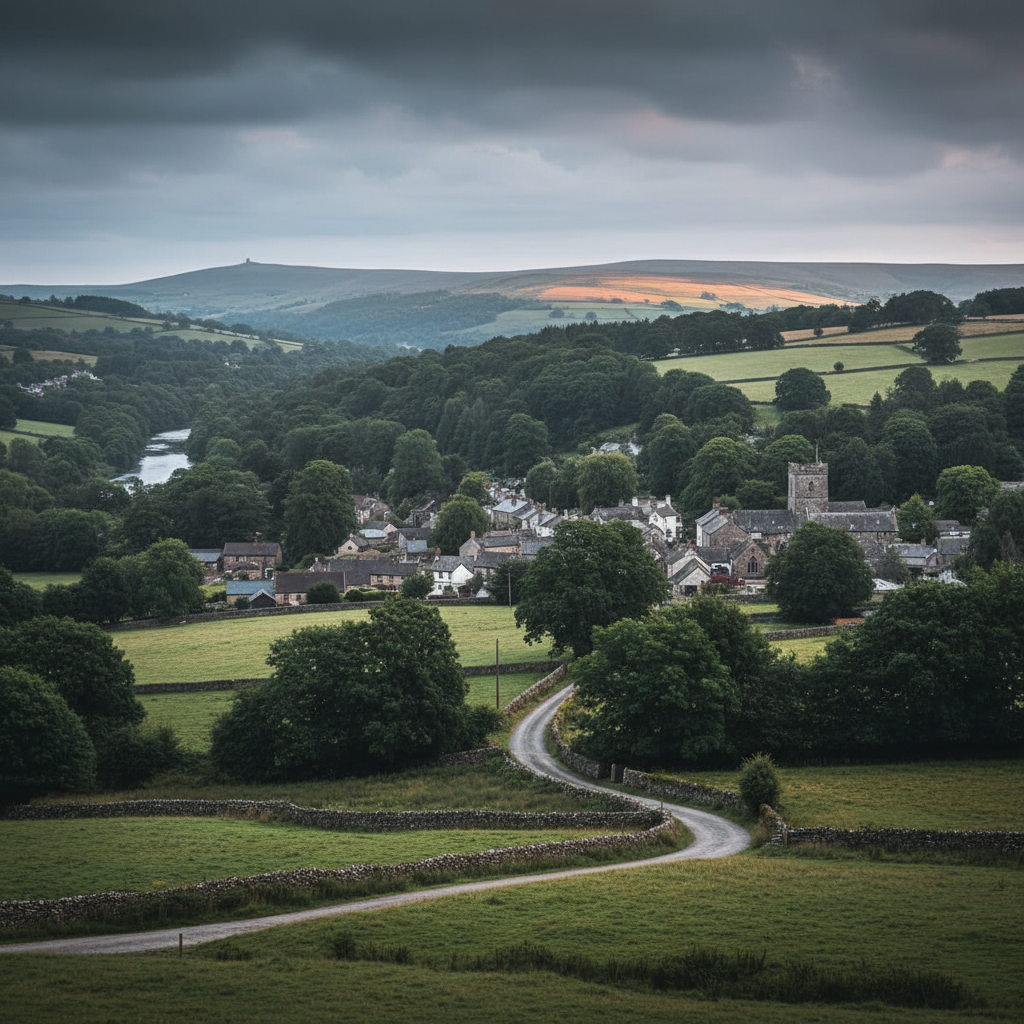
Buckland Monachorum
Buckland Monachorum combines rural calm with excellent access to moor-edge landscapes.
Lydford
A quiet Dartmoor-edge village with one of the area's most striking natural features.
Mary Tavy
Mary Tavy combines rural village atmosphere with immediate access to western Dartmoor walking.
Join the 3moors Community for path conditions & local tips.
JoinWhy this place matters
Peter Tavy — in its own right
Peter Tavy does not ask much of a visitor and does not promise a great deal in return. What it offers instead is the experience of a place that has not been arranged for your convenience, where the daily life of the village proceeds according to its own requirements rather than yours. For those who have spent time at the more frequented parts of Dartmoor, this is not a small thing. The sense of community that persists here is not something that announces itself. It is present in the way the pub functions, in the upkeep of the churchyard, in the working farms at the village edge. These are the signs of a settlement with people who are committed to it beyond the season, who have relationships with the place that predate and will outlast any particular visit. Sitting with that knowledge, even briefly, changes the quality of attention you bring to the landscape around it.
Explore more
Discover other places, walks, and hidden corners across Dartmoor.