
Dartmoor · West Dartmoor
Sampford Spiney
A tiny moor-edge settlement close to open western Dartmoor country.
About
Sampford Spiney
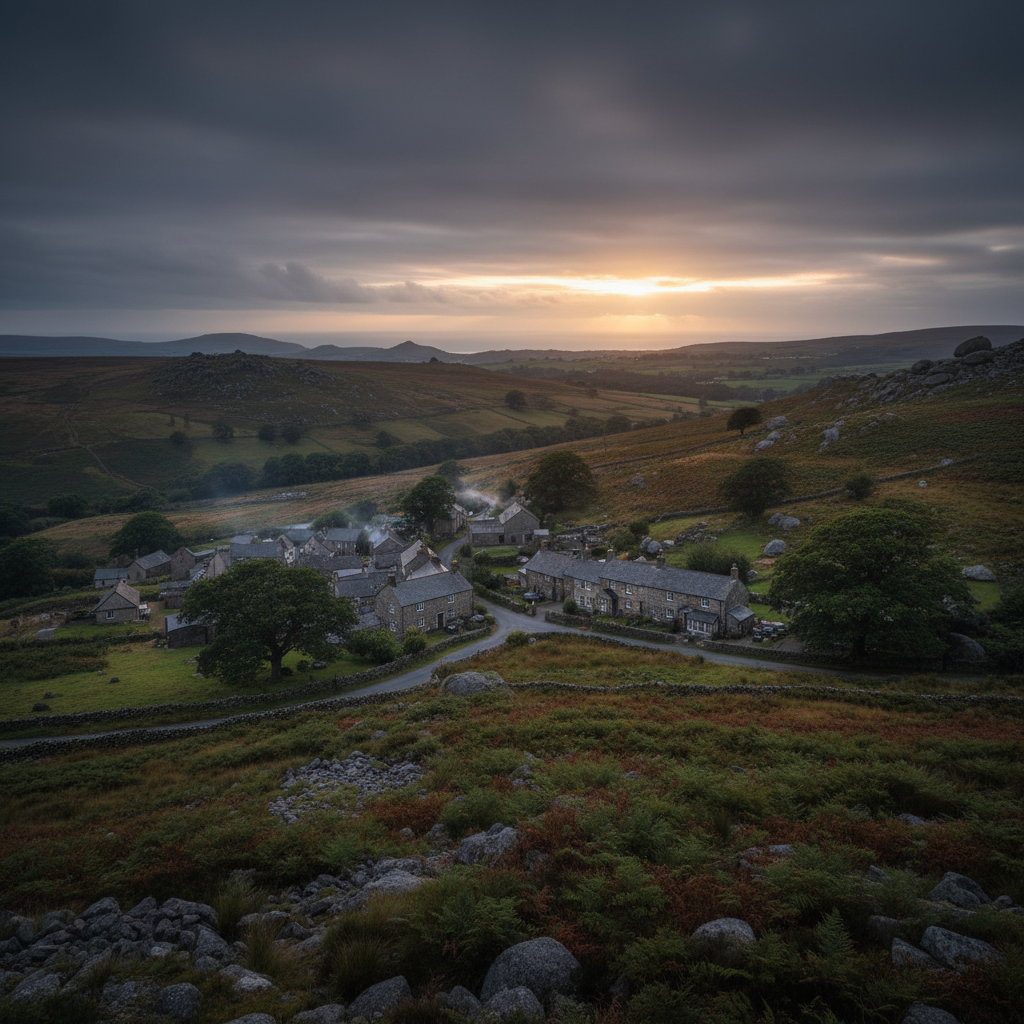
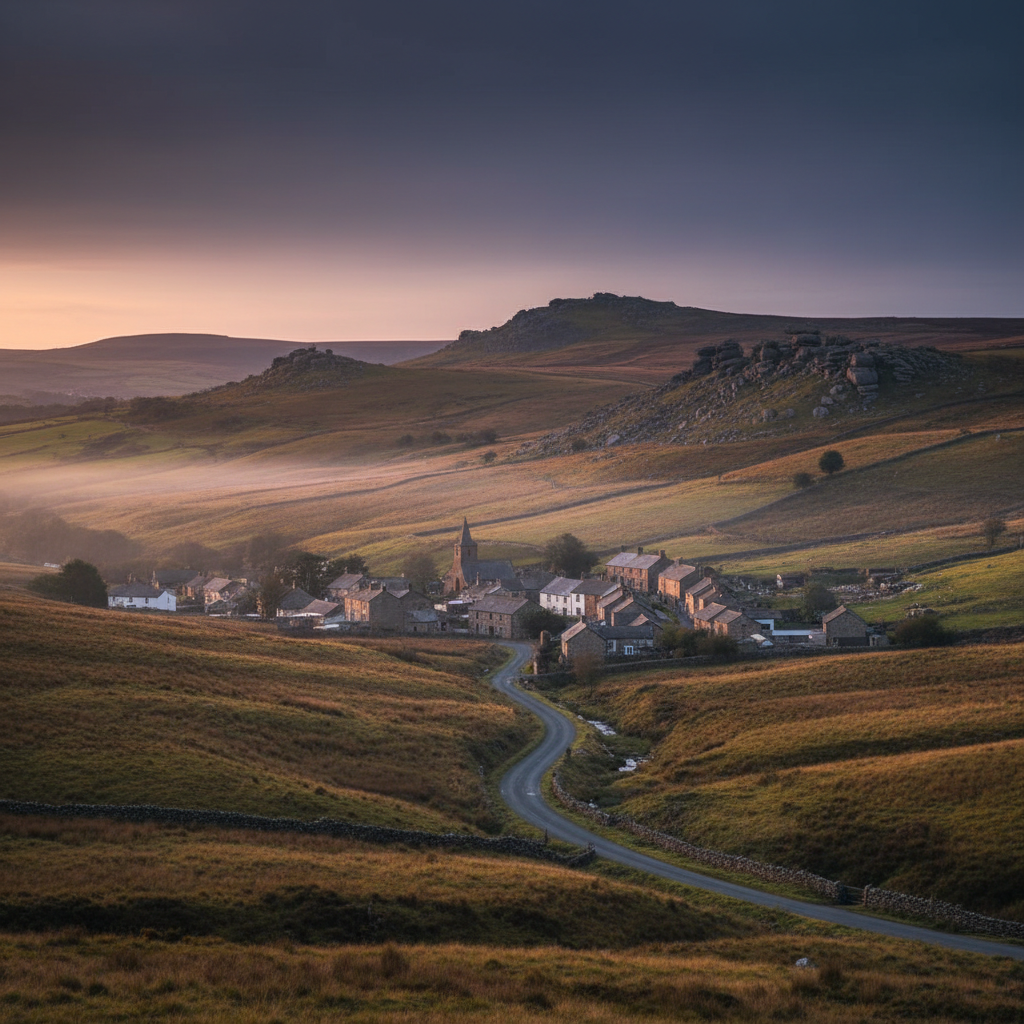
Sampford Spiney sits quietly on the western edge of Dartmoor, a small granite settlement tucked into a fold of land between the open moor and the enclosed farmland of the Walkham valley. It is not a place most people pass through by accident. The lanes that reach it are narrow and purposeful, and the village itself occupies only a modest cluster of stone buildings gathered around its medieval church. The surrounding countryside is a working agricultural landscape, and the rhythm of the place reflects that fact plainly.
The rural life here is of the unhurried, functional sort. Farms still work the land around the village, and the lanes carry tractors as readily as walkers. There are no cafés, no gift shops, and no obvious concessions to tourism. What exists instead is a settlement that has organised itself around necessity rather than appearance, and that gives it an authenticity that more visited moorland villages sometimes lack.
People come to Sampford Spiney primarily for what lies beyond it. Within a short walk, the enclosed fields give way to open moorland, and the scale of the landscape changes immediately. The tor-studded plateau of western Dartmoor stretches out ahead, and the transition from lane to moor feels abrupt and clarifying. That proximity to something genuinely open and unmanaged is the village's clearest asset.
The church of St Mary is the oldest structure in the settlement and thought to date from the thirteenth century, with later additions that accumulated over several hundred years. It stands slightly apart from the main cluster of buildings, surrounded by a stone-walled churchyard, and its proportions are modest, as suited to a small moorland parish as a place of worship could reasonably be.
Character
The feel of Sampford Spiney
There is a particular quality of stillness in Sampford Spiney that is not simply the absence of noise but something more textured than that. The stone walls absorb sound rather than reflect it. The lanes between buildings are narrow enough that the sky feels rationed. When the wind is low, the village can feel almost suspended, as though it exists slightly outside the ordinary pace of things.
This calm is not curated or performed. It is the natural result of a settlement that has no particular reason to draw attention to itself. There is no green in the conventional sense, no focal gathering point that invites lingering. The buildings relate to each other in a matter-of-fact way, and the spaces between them are functional rather than picturesque. That absence of self-consciousness is part of what makes the place feel genuinely itself rather than a version of something else.
The church is the one place where the village's long presence in the landscape becomes tangible. The stonework is time-worn in a way that speaks less of renovation than of patient endurance, and the churchyard, with its irregular slabs and boundary wall, carries the particular weight of a place that has been tended continuously for centuries rather than restored for effect.
First-hand visit
Keith's Take
The sound that stayed with me was wind in the churchyard trees, low and continuous, as though the moor above was breathing through the village on its way to somewhere else.
A single rook, perched on the ridge of the church roof, was watching the lane below with the particular attentiveness of an animal that has learned to read human movement. It did not move when I passed underneath. It simply recalibrated its gaze and went on watching.
That image has stayed with me more than the views from the tor I walked to afterwards, or the quality of the light over the western plateau in the early afternoon. There was something in the bird's composure that seemed to belong to the place itself: an unhurried watchfulness, a refusal to be disturbed by passing traffic. The church behind it was the same. The stone wall bordering the lane was the same. Everything here seemed to have arrived at a kind of patient equilibrium that was not indifference but something more considered.
I went back to look at the church before leaving. The door was unlocked. Inside, the stonework had the texture of something that had been in use rather than preserved, worn smooth in the places where hands had rested and rough everywhere else. I sat for a few minutes in the cool of it, which is longer than I had planned, and when I came out the rook had gone.
Keith's Take — a first-hand account from the 3moors team
Map & Getting Here
Getting to Sampford Spiney
What to expect
A natural way to spend time here
The village unfolds in a matter of seconds. You pass the first farm buildings, the lane narrows further, the church appears on one side and a handful of stone-built cottages on the other, and then you are through it. There is no moment of arrival in the conventional sense, no point at which the place announces itself. It simply begins and ends with equal quietness.
What stays with you longer is sound, or rather the particular composition of it: a gate latch somewhere out of sight, rooks working the trees behind the churchyard, the low persistent sound of wind across the moor pushing down into the valley. These are not dramatic effects. They are the sounds of a place that has not been arranged for anyone's benefit, and they register more clearly once you have stopped moving.
The most rewarding approach is a patient one. This is not a place that yields anything to urgency. Walk the lane past the church, pause at the field gate where the enclosed land begins to open, and let the scale of what lies ahead settle in gradually. Visitors who treat the village as a mere staging post miss the particular quality of the transition between the two landscapes, which is worth attending to in itself.
What makes it stand out
What makes Sampford Spiney special
What distinguishes Sampford Spiney from other small settlements along the moor edge is not any single feature but a combination of factors that rarely coincide: immediate access to open moorland, almost no visitor infrastructure, and a landscape approach from the village that is genuinely varied. Within twenty minutes of leaving the last building, a walker can be on open tor country without having traversed a car park, a visitor centre, or a marked interpretation trail.
There is also the matter of the western Dartmoor light. This part of the moor catches weather differently from the more visited eastern approaches. The sky tends to be wider, the horizon more exposed, and on clear days the views westward carry a quality of emptiness that is harder to find on the busier routes around Haytor or Hound Tor. Sampford Spiney sits at the threshold of that openness, and its position gives it a particular relationship to the moor that is less about arrival than about imminent departure into something larger.
Don't miss
Things to see and do
Pause at the churchyard gate and look back across the valley towards the enclosed fields below, where the patchwork of old boundaries is still visible in the hedgeline.
Step inside St Mary's church if it is open, and take a moment with the interior stonework, which retains a roughness that many moorland churches have since lost to over-restoration.
Follow the lane westward out of the village to the point where the last field wall gives way and the open moor begins, and mark that threshold carefully.
Walk up onto the ridge above the village and locate Feather Tor and Vixen Tor to the north, both within reasonable reach and offering very different characters of granite.
Watch the skies over the western plateau in the hour before dusk, when the light flattens across the high ground and the horizon becomes briefly luminous.
Listen for the sound of the Walkham river somewhere below the village, especially after rain, when it carries further up the valley than usual.
Take the bridleway south-east and notice how the moorland surface changes underfoot within a few hundred metres, from close-cropped turf to deeper, spongier ground.
Walks from here
Getting out from Sampford Spiney
The most direct walking access from the village leads westward and upward onto the open moor within fifteen to twenty minutes. The ground rises steadily from the lane, and once past the intake wall the terrain opens into a broad, exposed plateau with a network of paths connecting the tors that punctuate this part of the moor. Vixen Tor, to the north-west, is one of the most striking outcrops on this section of western Dartmoor and is reachable in under an hour on a clear path across the open ground.
For a longer circuit, it is possible to descend into the Walkham valley to the east, following the river upstream or downstream depending on conditions, before looping back to the village via bridleway and farm track. The Walkham valley is wooded in its lower sections and offers a complete change of character from the open plateau, making it an effective return route that prevents the walk from repeating itself. The combination of open moorland outward and enclosed valley return is one of the better structural walks in this part of Dartmoor.
A shorter alternative follows the lanes and field paths around the village itself, tracing the boundary between enclosed farmland and open moor without committing to the higher ground. This is a useful option in poor weather or for those wanting to understand the village's relationship to its surroundings without a full moorland walk.
Good to know
Before you go
The lanes approaching Sampford Spiney are single-track for most of their length, and passing places are limited. It is worth planning your approach route in advance and being prepared to reverse for some distance. Parking within the village is extremely limited and should not be assumed. Most visitors leave vehicles at one of the nearby moorland car parks and walk in, or time their arrival for quieter periods.
The village has no facilities. There are no pubs, no shops, and no public toilets within the settlement. The nearest reliable services are in Horrabridge or Yelverton, both a short drive away. This is not a hardship, but it does mean that any walk from here should be self-sufficient in provisions, water, and navigation. The open moorland above the village has few waymarks once you leave the bridleways, and in low cloud or rain the orientation can become more demanding than the modest walking distances suggest.
Across the seasons: In late spring, the lanes around Sampford Spiney become briefly lush, with cow parsley and red campion filling the verges before the summer dries them back. This is a good period to walk the enclosed field paths, when the light is long and the moor above is beginning to green up after winter. The village itself looks its most composed at this time of year, the stone buildings sitting quietly against the fresh growth of the surrounding fields. Autumn is arguably the most rewarding season on the western plateau above the village. In October, when the bracken turns a deep copper and the grass bleaches to pale gold, the quality of the walking changes entirely. The air is often clearer than in summer, the colours on the high ground are specific and unhurried in their fading, and the reduced daylight gives the walks a more concentrated quality. This is the time when the open moorland above the village is most itself. Winter visits require care and preparation. The lane into the village can become difficult after sustained frost, and the open moor above is genuinely exposed in strong winds. That said, a still winter day here can be extraordinary: the surrounding landscape stripped back, the views extending much further than in summer, and the village sitting in a quietness that feels complete rather than merely seasonal.
Practical info
Practical info
Sampford Spiney has no dedicated car park. Space is limited to a small number of informal roadside spots near the church and along the narrow lanes approaching the village, and these fill quickly even on quiet days. Vehicles should not block field gates or passing places. If space is absent, the nearby Pew Tor area offers more reliable off-road parking a short distance away.
There are no public facilities in Sampford Spiney. No toilets, no café, no shop. The village is entirely residential and should be treated as such. Visitors should arrive self-sufficient and plan resupply at Tavistock, which is a reasonable drive to the west.
The lanes into Sampford Spiney are narrow and can feel tight even for smaller vehicles, particularly after wet weather when verges soften. The village itself sits on moderately sloping ground and the terrain is generally manageable underfoot, though paths leading out onto the open moor quickly become rougher and boggy in places after rain. Waterproof footwear is advisable for any exploration beyond the village margins. The open ground to the east rises gradually, with no steep technical sections, but the exposure increases noticeably once you clear the hedgelined fields.
varies
Explore nearby
Places nearby
Buckland Monachorum
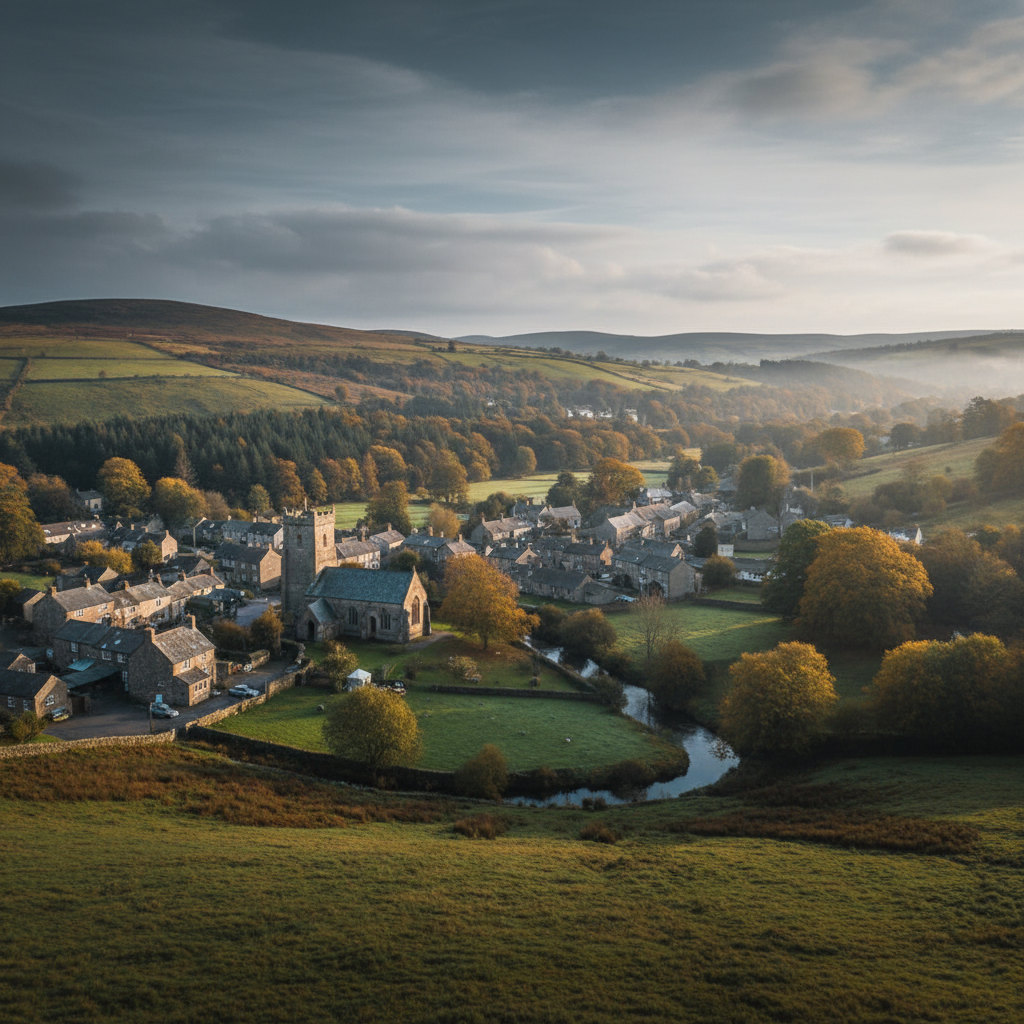
Buckland Monachorum combines rural calm with excellent access to moor-edge landscapes.
Buckland Monachorum
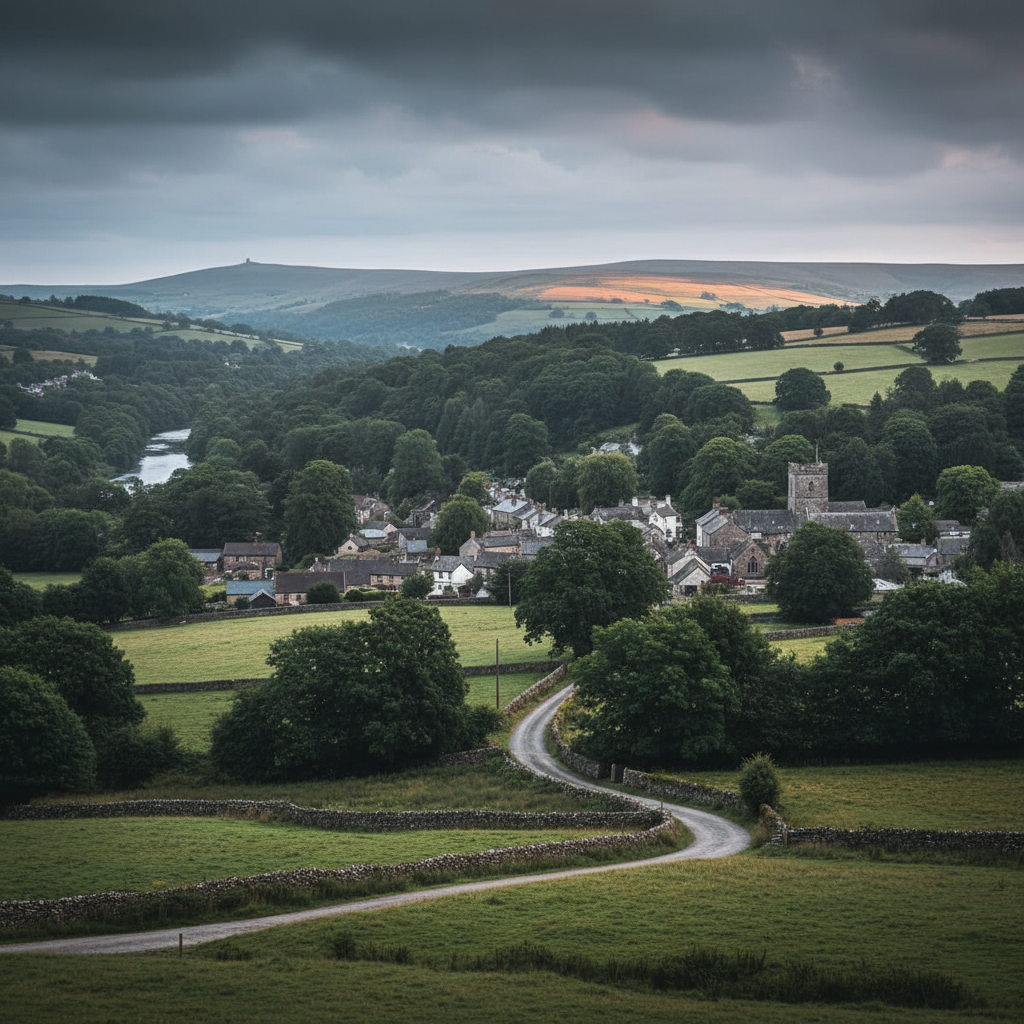
Buckland Monachorum combines rural calm with excellent access to moor-edge landscapes.
Lydford
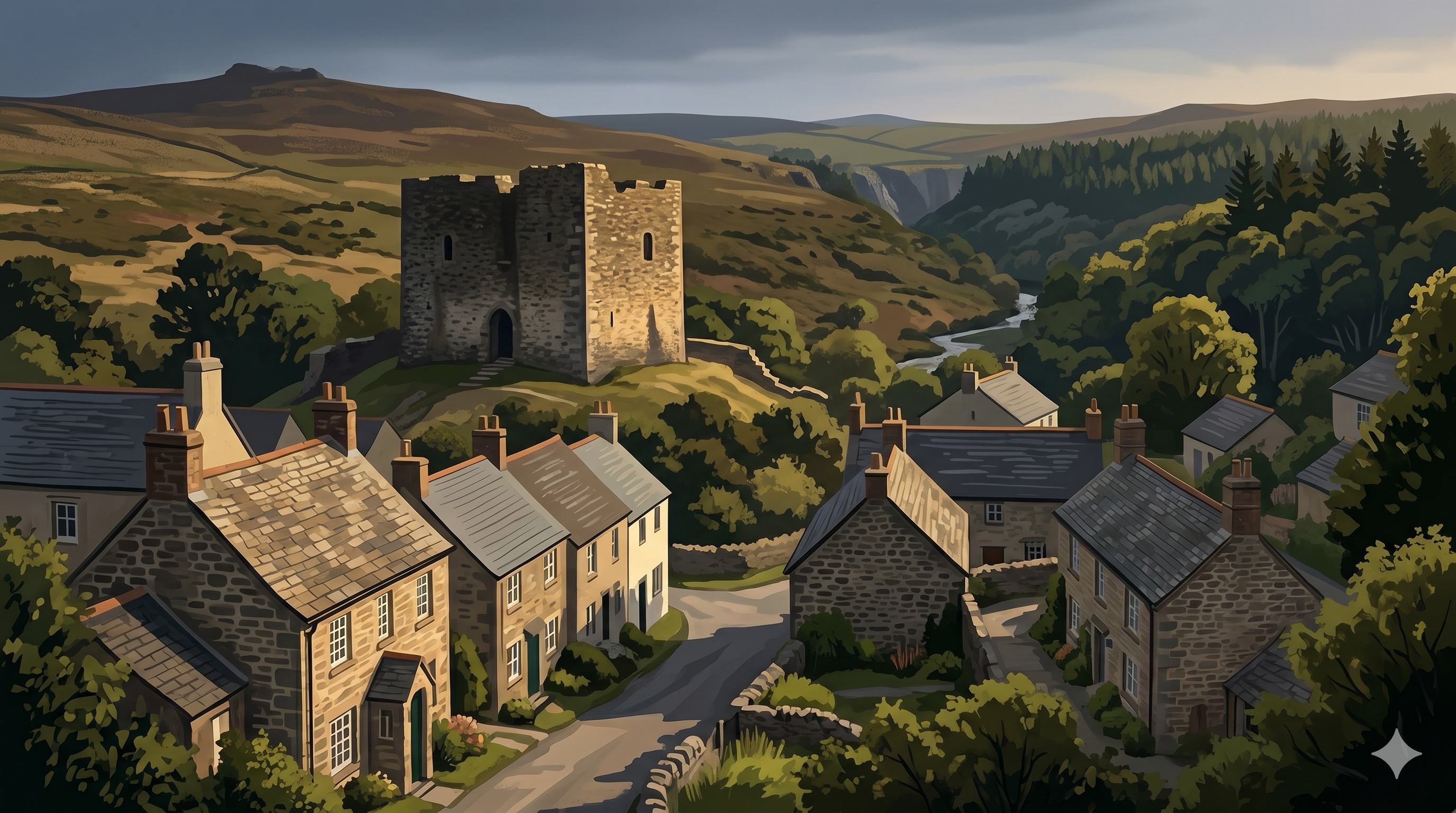
A quiet Dartmoor-edge village with one of the area's most striking natural features.
Mary Tavy
Mary Tavy combines rural village atmosphere with immediate access to western Dartmoor walking.
Join the 3moors Community for path conditions & local tips.
JoinWhy this place matters
Sampford Spiney — in its own right
What Sampford Spiney offers, in the end, is something harder to name than a list of features: a sense of a place that has continued on its own terms, not because it has been left behind but because it has never needed to be anything other than what it is. The farms still work, the church is still tended, and the footpaths still connect the village to the open ground above in the way they always have. That continuity is not dramatic, but it is real. There is something quietly sustaining about a community that exists at this scale and with this degree of self-sufficiency. Not every place needs to accommodate visitors gracefully. Sampford Spiney absorbs them without effort, and releases them back to the moor above without ceremony, and perhaps that is exactly the kind of relationship a village and a landscape should have.
Explore more
Discover other places, walks, and hidden corners across Dartmoor.