Victorian
Poldark Mine
A historic Cornish mine preserving the underground world of tin mining and the stories of those who worked below ground.
Quick facts
Why this place matters
Poldark Mine matters because it helps preserve and interpret Cornwall’s mining heritage. It brings visitors close to the difficult and dangerous world of miners and the industry that shaped Cornwall.
The real work was often below your feet.
What it is
Historic mining site with underground access.
Why it mattered
It mattered because industry happened underground as much as above.
What you can see
Workings, remains and mining heritage.
Poldark lets you feel that.
What happened here
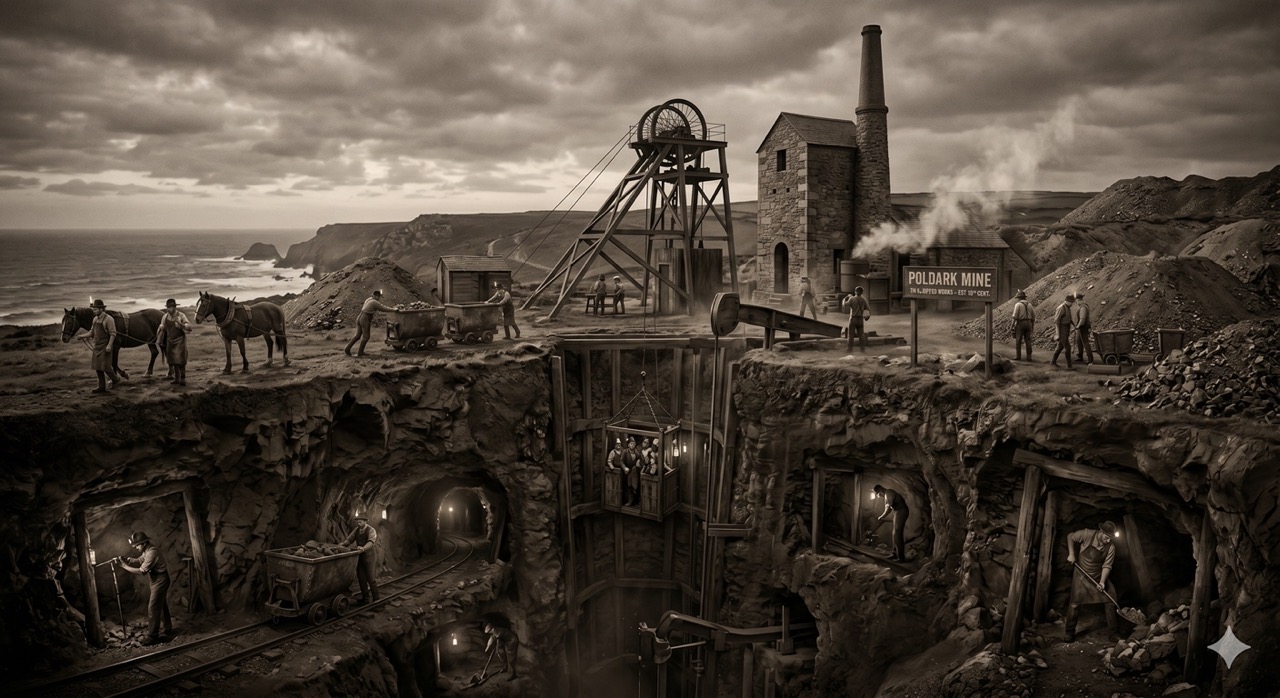
Poldark Mine offers a rare chance to explore the underground world of Cornish mining. Its tunnels, machinery and history reveal the harsh reality of life beneath the surface.
Cornwall’s mining history stretches back centuries, but sites like Poldark Mine help make that history visible and understandable. The mine worked valuable minerals including tin, helping support local economies and communities.
Mining underground was dangerous, hard and physically demanding. Workers faced darkness, water, collapsing rock and long hours.
Poldark Mine later became important as a preserved heritage attraction, allowing visitors to enter old workings and understand the reality of mining life.
It also became famous through links to television and the wider popular image of Cornwall’s mining heritage.
Key dates
19th century
Mining activity active
Victorian period
Industrial development expands
Modern era
Mining heritage interpreted
Standing here now
Standing here now, the buildings and shafts hint at what lies below. Underground, the darkness, damp air and narrow passages make the mining story feel immediate and real.
What to look for
- 1Mine shafts and surface buildings
- 2Underground tunnels and workings
- 3Mining machinery and equipment
- 4Interpretation of miners’ working conditions
Landscape & wider significance
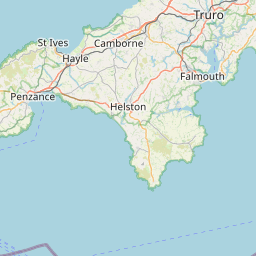
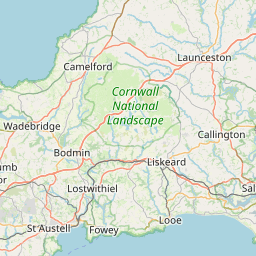
Set inland in Cornwall, the mine reflects the mineral rich geology that shaped much of the region’s economy. The surrounding landscape is quieter than the dramatic cliff mines, but the underground story is no less significant.
Myths & folklore
Cornish mining folklore includes knockers, spirits believed to live underground and warn miners of danger.
Visiting today
Managed visitor attraction. Underground tours may involve confined spaces and damp conditions. Check opening times and accessibility before visiting.
Good to know
💡 Did you know?
🎯 Try this when you visit
🤔 Think about this
Map & Directions



Related history nearby
Georgian
Salcombe Smuggling
A beautiful estuary town with a hidden past of contraband cargoes, secret coves and midnight smuggling runs.
Victorian
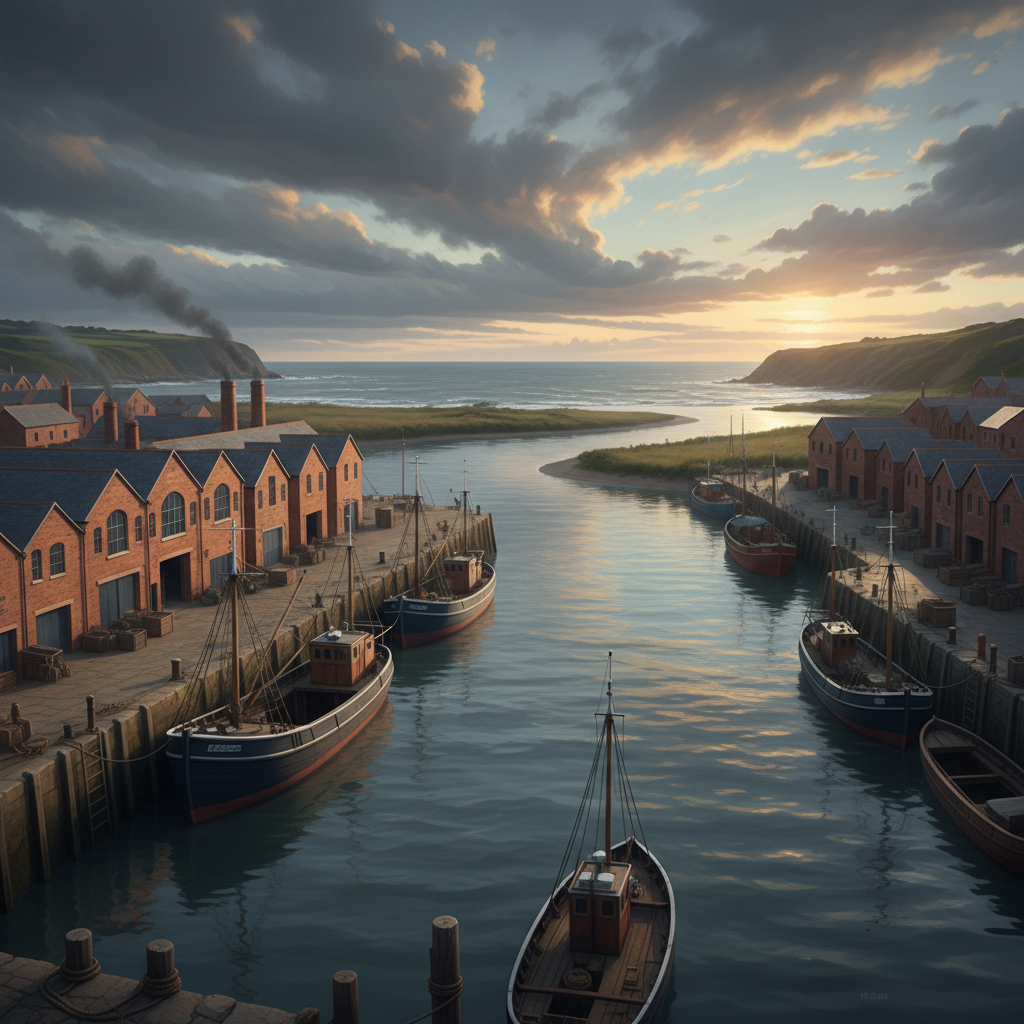
Teignmouth Port
A historic Devon port where trade, shipbuilding and seafaring shaped the town and its place on the south coast.
Victorian
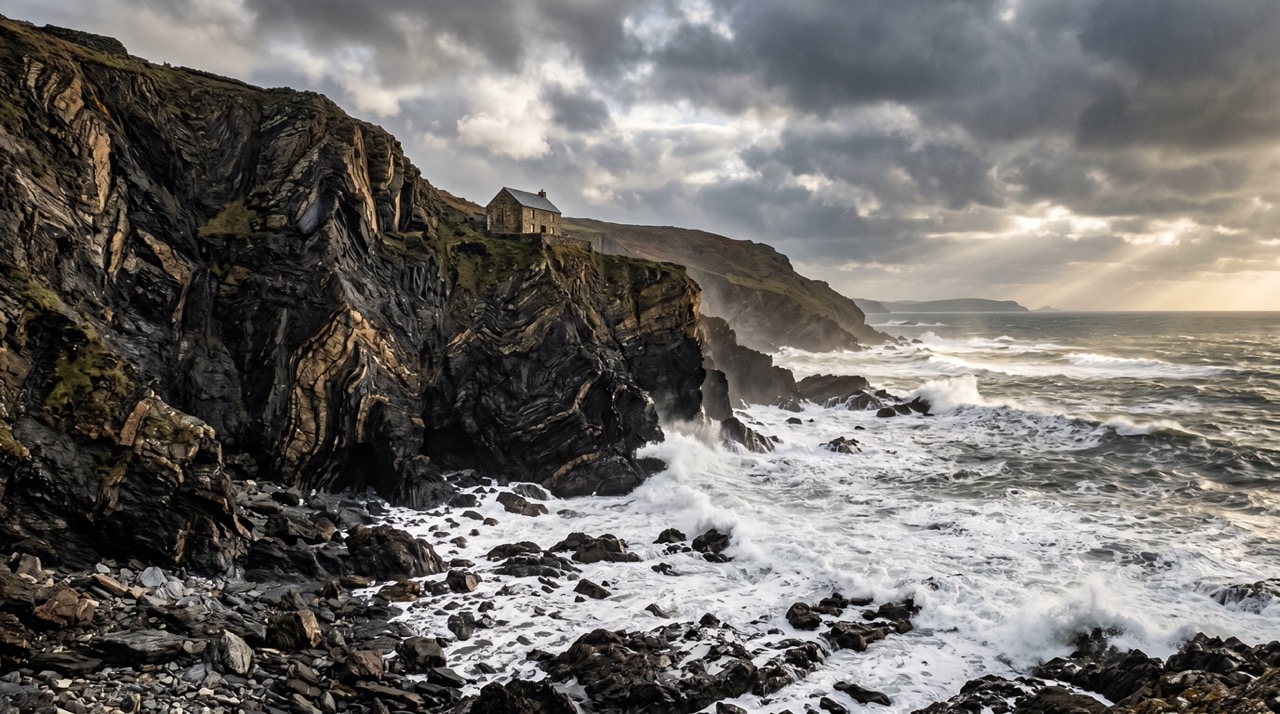
Hartland Quay Shipwrecks
A dramatic stretch of coast where storms, rock and Atlantic force turned Hartland Quay into one of the South West’s most dangerous shipwreck shores.
Georgian
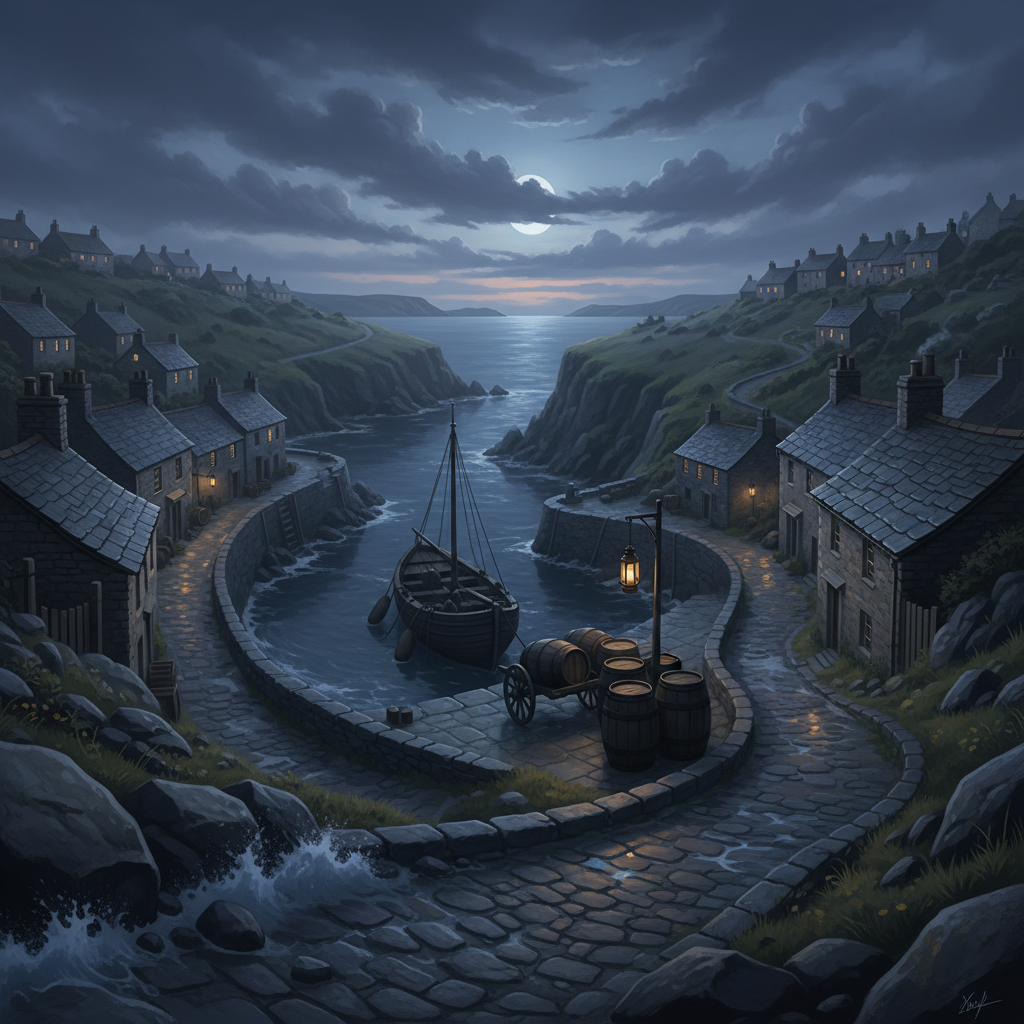
Port Isaac Smuggling
A picturesque Cornish fishing village with a darker past of hidden cargoes, secret coves and midnight smuggling runs.
Join the 3moors Community for path conditions & local tips.
JoinNearby places
Quick facts