
Other · Lizard Peninsula
Coverack
A sheltered fishing village where stone cottages meet turquoise water.
About
Coverack
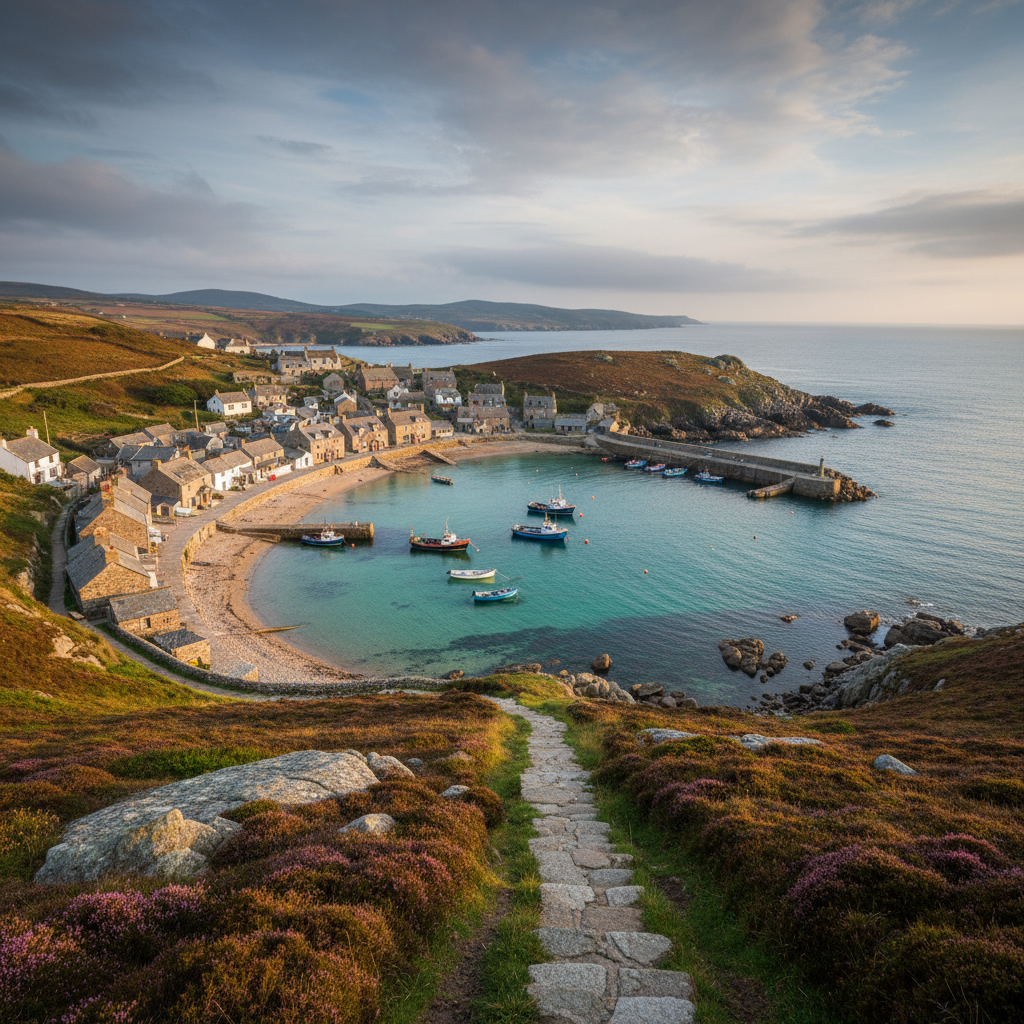
Coverack sits in a shallow bay on the eastern edge of the Lizard Peninsula, tucked below a low headland where the land curves gently to meet the sea. It is a working fishing village in the truest sense of that phrase, not a place that has merely kept a fishing boat or two for atmosphere, but somewhere the sea has always been the reason for being here. The harbour wall, the crabbing pots stacked in irregular rows, the small fleet of vessels that still go out when conditions allow: these are not props. They are the ongoing logic of the place.
What most people notice almost immediately is the quiet. Not an emptiness, but a particular kind of stillness that settles when a place has never been shaped around mass tourism. The village does not announce itself. There are no large car parks at its heart, no strip of souvenir shops, no queue for ice cream blocking the pavement in summer. It arrives gradually, as you descend the narrow lane toward the cove, and it holds.
Coverack occupies a position on the Lizard that keeps it slightly apart from the more heavily visited spots to the west. Kynance Cove draws its crowds, the Lizard village its day-trippers, but Coverack has maintained a different rhythm. The water in the bay can take on a remarkable clarity on calm days, running from green at the shore to deeper blue further out, but even that does not seem to have fully broken the village's reserve.
People visit here for the coast path, for the beach, for the relative simplicity of a day that unfolds at its own pace. There are no must-see attractions in the conventional sense. The appeal is cumulative rather than immediate, a place that rewards patience and an unhurried approach.
Character
The feel of Coverack
The built fabric of Coverack is modest and coherent. Stone cottages line the seafront in irregular formation, their whitewashed or bare granite walls pressed close to the harbour road. The Paris Hotel, named after a merchant ship that ran aground on the nearby Manacles reef in 1899, anchors the lower village with a solidity that feels right for the setting. There is a small beach, a slipway, a cluster of boats, and a handful of lanes that climb steeply behind the shore. Nothing is oversized. The village seems to have grown to fit its geography rather than to expand beyond it.
What gives Coverack its particular character, though, is the sense that it still belongs to the people who live here. Community life operates alongside the visitor trade rather than being displaced by it. There is a lifeboat station that remains active. There is a village hall. The post office function, such as it is, runs through a local shop. These are not heritage features preserved for effect but working components of a settlement that has not yet been hollowed out by the economics that have reshaped so many Cornish coastal villages. Conversations happen naturally in the street. Children play near the water. In the early evening, when the day visitors have gone, the village reassembles around its own routines.
That community coherence is fragile and worth appreciating with some awareness. Coverack has faced the same pressures as everywhere else on this coast: second homes, rising property prices, the slow attrition of year-round population. But for the moment it retains something that is increasingly hard to find: the feeling that a place like this is still, primarily, for the people who live in it.
First-hand visit
Keith's Take
The kind of place that takes a few hours to properly settle into, and that you find yourself thinking about on the drive home.
A crabbing pot left on the slipway, still damp, rope coiled loosely on top. It is the kind of detail you stop noticing after a few visits, which is perhaps the point. Coverack does not make its working life conspicuous. It simply continues it, and after a while you start to read the village differently: not as a place arranged for visitors, but as one that accommodates them with a certain equanimity while getting on with other things.
What regular visitors come to understand is that Coverack operates on a daily rhythm that is worth orienting yourself around rather than imposing your own schedule on top of it. The morning belongs to the fishermen and the dog walkers. The middle of the day, when the car park is at capacity and the café has a queue, is actually the least rewarding time to be at the harbour. Come back at four in the afternoon when the light has moved around to the west and the day-trippers are heading for the lanes. The village changes. The conversations become less transactional. The boats are returned to their moorings. There is a quality of ease in the air that the midday rush does not carry.
The other thing that takes time to notice is how seasonal the place genuinely is, not in the tourist-industry sense, but in the older meaning: the way the sea changes, the way the light changes, the way the village turns slightly inward from October onward. I have been here in March when the coast path hedges were still winter-bare and the café was closed on three days out of five, and the harbour felt entirely different: less curated, more itself. That version of Coverack is worth knowing about.
Keith's Take — a first-hand account from the 3moors team
Map & Getting Here
Getting to Coverack





What to expect
A natural way to spend time here
The village unfolds along a single seafront lane that curves with the bay. You move through it naturally on foot, passing the hotel, the slip, the moored boats, and the small beach in a matter of minutes. The scale is intimate without feeling cramped, and you quickly develop a sense of the whole place: where the coast path leaves at either end of the bay, where the lane climbs back toward the main road, how the headlands frame the view out to sea.
On a still morning, with the tide out and the light coming in low from the east, the sound the village makes is mostly water. The soft movement of boats against their moorings, the pull of the sea across the shingle, the occasional call of a herring gull from the harbour wall. There is very little engine noise. The smell of the foreshore at low tide is clean and brackish, seaweed and stone warmed by early sun.
Coverack rewards a patient approach above almost anything else. Bring no particular agenda. Walk the bay in both directions. Sit on the harbour wall long enough for the light to shift. The village does not perform for its visitors. It simply continues, and the best thing you can do is fall in step with it for a while.
What makes it stand out
What makes Coverack special
Coverack is notable, in part, for what it has not become. Along this stretch of the Lizard, coastal villages can tip quickly toward the purely scenic, places maintained in attractive condition for visitors while losing the texture of everyday life. Coverack has not quite made that journey. The harbour remains a functional space, the beach does not fill to capacity on all but the hottest days, and the lanes behind the village carry the ordinary business of a living community as much as the traffic of tourism.
The geology here also sets it apart. The Lizard Peninsula sits on one of the most geologically distinctive outcrops in Britain, a mass of serpentinite and peridotite that gives the rocks around Coverack an unusual appearance, ranging from dark green to deep red, smooth and almost waxy when wet. The foreshore at low tide reveals this rock in detail, and it is worth spending time simply looking at it. This is ancient oceanic crust, brought to the surface by tectonic forces over hundreds of millions of years. It is not the kind of landscape feature that shouts for attention, but it is genuinely extraordinary to those who know what they are looking at.
Don't miss
Things to see and do
Walk the coast path north toward Lowland Point, where the land flattens and the Manacles reef becomes visible offshore at low water.
Look closely at the rocks on the foreshore at low tide: the serpentinite shows remarkable colour variation, from dark olive to rust red, and the surfaces have a smoothness unlike ordinary coastal stone.
Sit on the harbour wall at the end of the afternoon, when the day visitors have thinned and the light on the water begins to soften.
Leave the seafront lane and follow one of the steep back lanes above the village for a view back down across the bay and out toward the horizon.
Watch the working boats on the slipway: the routines of a small-scale fishing operation are still visible here in a way they are not in more heavily touristed harbours.
Notice the Paris Hotel sign and take a moment to look into the story of the wreck it commemorates: the Manacles claimed many ships, and that history is embedded in the everyday life of the place.
Walk south on the coast path toward Chynhalls Point, where the cliff edge gives a clear view back across the entire sweep of Coverack Bay.
Walks from here
Getting out from Coverack
The South West Coast Path passes directly through Coverack, and both directions offer rewarding walking within reach of a day trip or morning out. Heading north, the path follows the cliff top toward Lowland Point and then curves inland slightly before continuing to Porthoustock and Porthallow. This stretch is lower and gentler than many parts of the Lizard coast, running across grazed headlands with wide sea views and very little in the way of steep ascent. The Manacles reef is visible offshore on clear days, a low dark line that explains a great deal of local maritime history.
Heading south from Coverack, the path climbs more sharply toward Chynhalls Point before descending and continuing toward Cadgwith. This section is wilder in character, with higher cliffs and more exposed walking, and it requires reasonable footwear and a degree of fitness. A circular route back to Coverack is not straightforward from the south without using inland lanes, but the lane walking through this part of the Lizard is quiet enough that it rarely feels like a compromise. The total distance to Cadgwith and back by road and path is manageable in a half day.
Good to know
Before you go
Coverack has limited parking close to the seafront, and in peak summer this fills early. Arriving before ten in the morning in July and August will make the difference between an easy visit and a frustrating one. The village is accessible by narrow lane from the B3294, and larger vehicles should take care on the final descent. Facilities in the village are deliberately simple: a pub, a café, and a small shop cover most needs, but for anything more substantial you will need to travel to Helston.
The bay is sheltered and generally safe for swimming, but as with any tidal cove on this coast, conditions vary and it is worth checking the state of the tide before entering the water. The beach is shingle and coarse sand, and the foreshore can be slippery on the serpentinite rock. The Manacles reef lies a few kilometres offshore and has strong tidal races: this is relevant only for those considering kayaking or open-water swimming beyond the immediate bay.
Across the seasons: Summer brings visitors, but Coverack absorbs them more readily than most villages its size on this coast. The bay is calm enough for family swimming from June through September, the coast path busy at weekends but rarely crowded on weekday mornings. The village does not radically transform in high season, which is part of its value, but the best of it is still found in the quieter hours. Spring and autumn are when the village returns most fully to itself. April and May bring early warmth and the coast path hedgerows into flower, with thrift and campion on the clifftops and a clarity to the air that summer humidity softens. In October, the angle of light changes noticeably: lower, more direct, catching the sea surface differently and giving the serpentinite foreshore a deeper, almost metallic quality. The village community is more visible in these months, with the hotel and café still open but the transient population reduced. Winter visits are possible and have their own austere appeal. The Lizard receives fewer hard frosts than inland Cornwall, and the coast path is walkable through the colder months with the right clothing. The sea in January is a different body of water to the turquoise of a June afternoon, darker and more deliberate, and Coverack's working character is at its most unguarded when there is no particular reason for anyone else to be there.
Local weather
Weather near Coverack
Heavy rain
Today
Met Office forecast · updated every 30 min
Practical info
Practical info
Parking in Coverack is limited and fills quickly in summer, particularly at weekends. There is a small public car park near the harbour, but spaces are shared with residents and working vehicles, so early arrival is advisable. Roadside parking in the village is restricted and narrow lanes make turning difficult. Arriving before 9am or after 4pm significantly improves your chances of finding a space without difficulty.
Coverack has a small number of facilities for visitors, including a café and a pub in the village centre, though opening hours vary by season and it is worth checking ahead. Public toilets are available near the harbour. There is no large supermarket or petrol station within the village itself, so arrive with whatever supplies you need. The village is self-contained but modest in scale.
The village centre and harbour front are relatively flat and accessible on foot. Some of the lanes and coastal paths leading out of Coverack involve short but steep gradients, and surfaces can become slippery after rain. The coast path to the north and south requires sturdy footwear, particularly in wetter months when exposed sections can be muddy or uneven. Those with limited mobility will find the harbour area and beach accessible, but the surrounding paths less so.
varies
Explore nearby
Places nearby
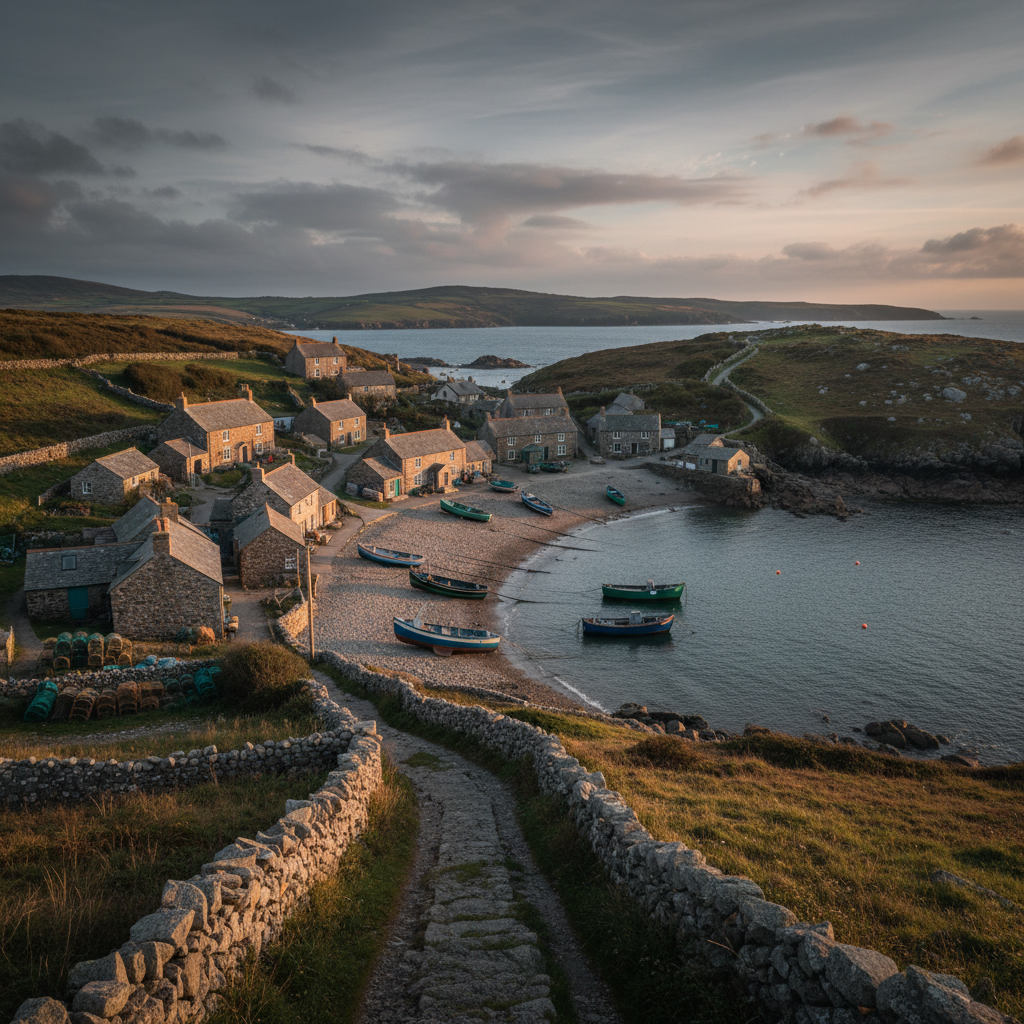
Cadgwith
Cadgwith feels quieter, older and less polished than many Cornish coastal villages.
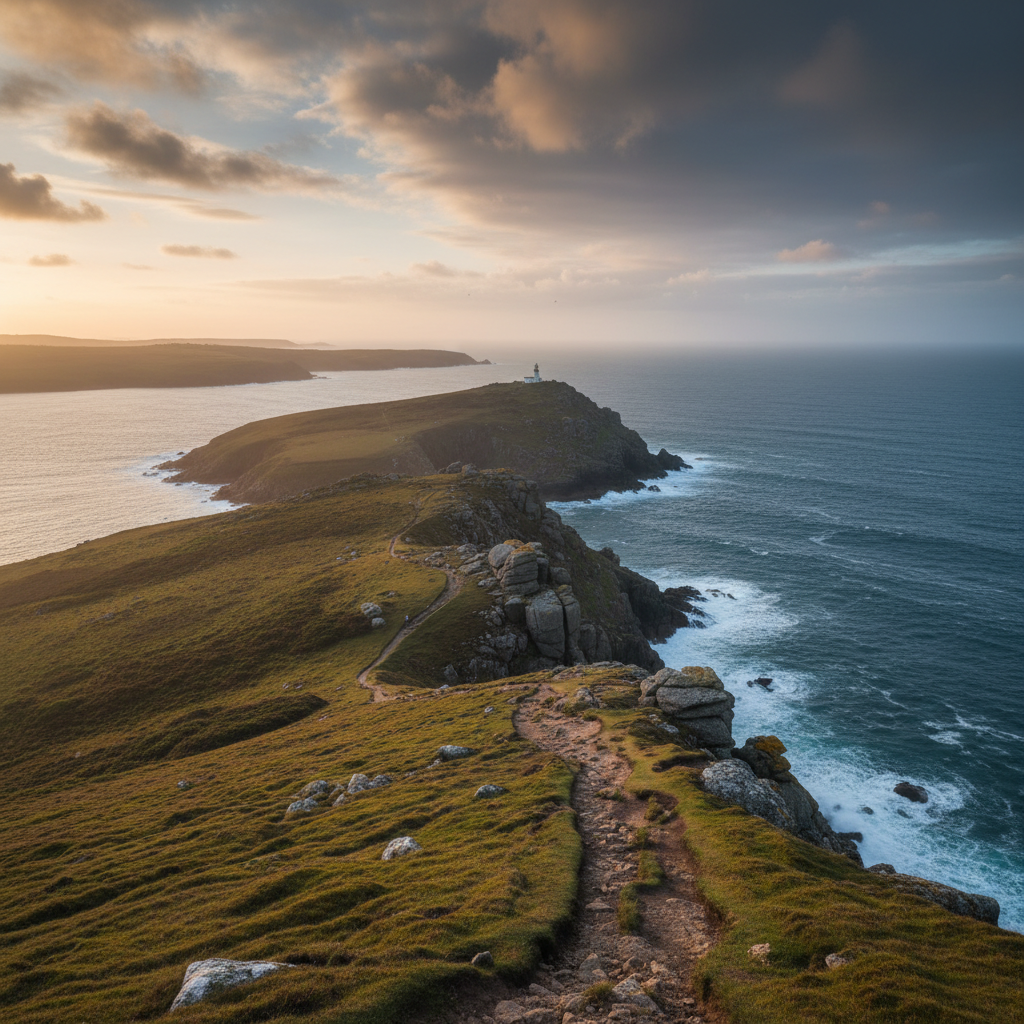
Lizard Point
Lizard Point offers rugged scenery, wildlife and a strong sense of Atlantic exposure.
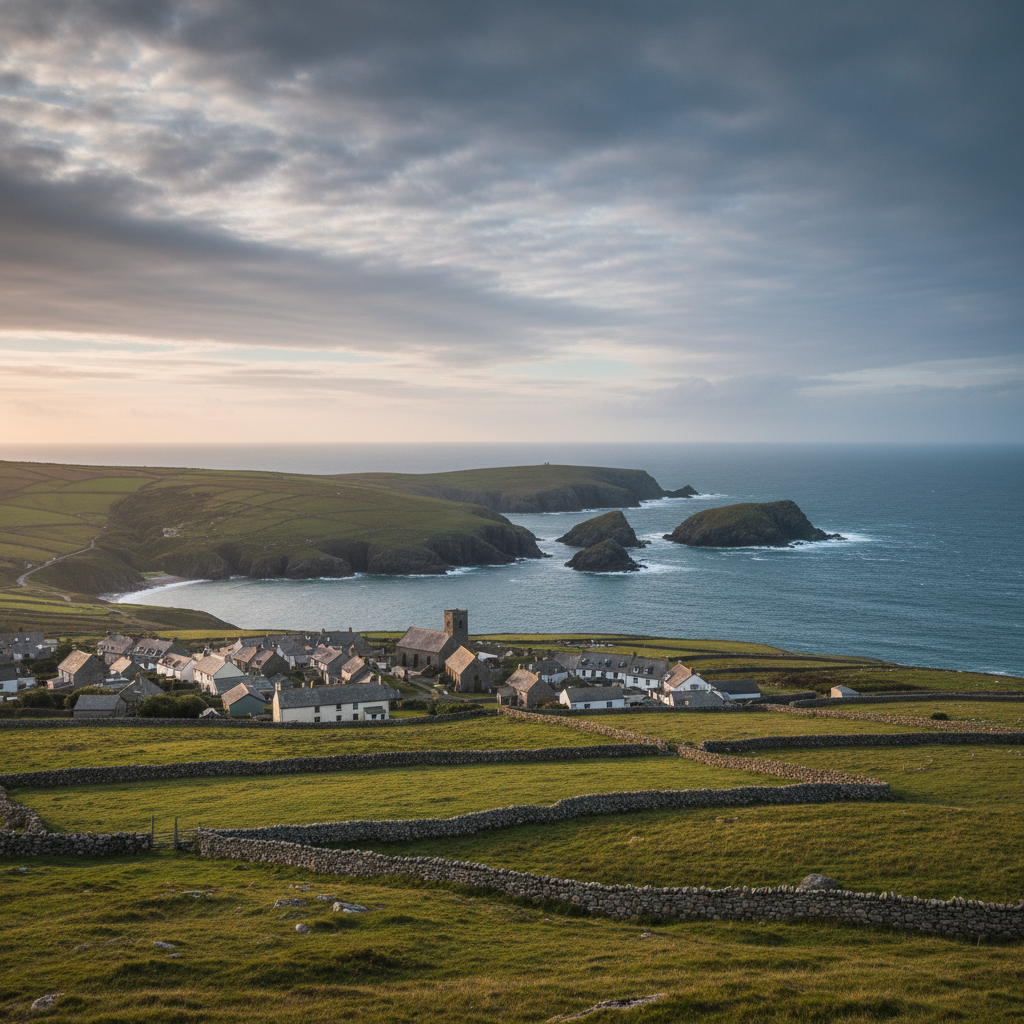
Mullion
Mullion combines village atmosphere with access to some of Cornwall’s wildest coastline.
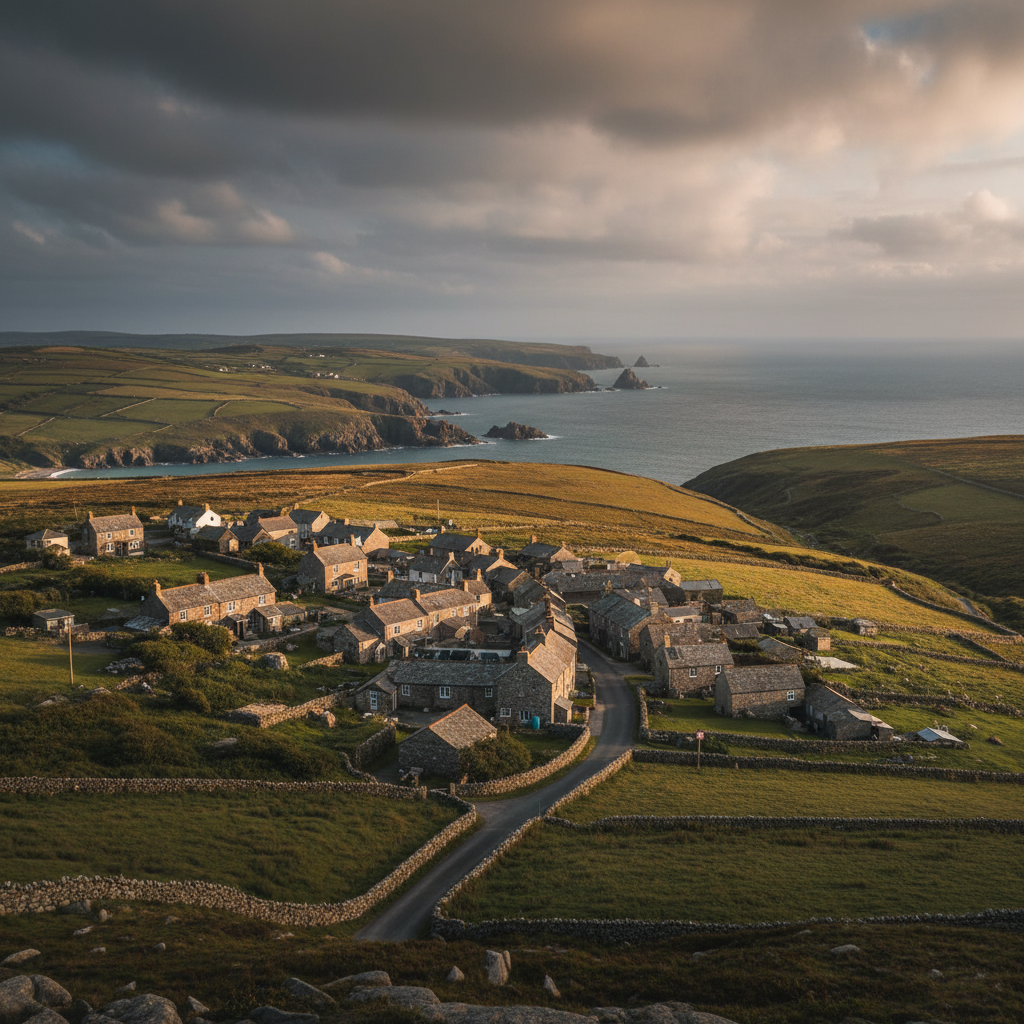
Mullion
Mullion combines village atmosphere with access to some of Cornwall’s wildest coastline.
Join the 3moors Community for path conditions & local tips.
JoinWhy this place matters
Coverack — in its own right
There is a moment, usually on the walk back up from the harbour in the early evening, when the bay opens behind you and you see how the village sits within its landscape: a small cluster of buildings held between headlands, with the open sea beyond and the Lizard farmland rising steeply at its back. It is a particular kind of enclosure, sheltered but not hemmed in, defined by geography in a way that gives the place its proportions and its logic. The Lizard Peninsula is a landscape that resists easy description, and Coverack inherits some of that resistance. The geology is unlike anything else in Britain. The light has a quality that changes with the state of the sea. The horizon is unusually clear, the land unusually low. A village that has grown from this ground and looked out across this water for centuries carries something of all that in the way it holds itself: rooted, specific, and not easily summarised.