Bodmin Moor · Lizard Peninsula
Mullion
A traditional village close to cliffs, coves and the rugged Lizard coast.
About
Mullion
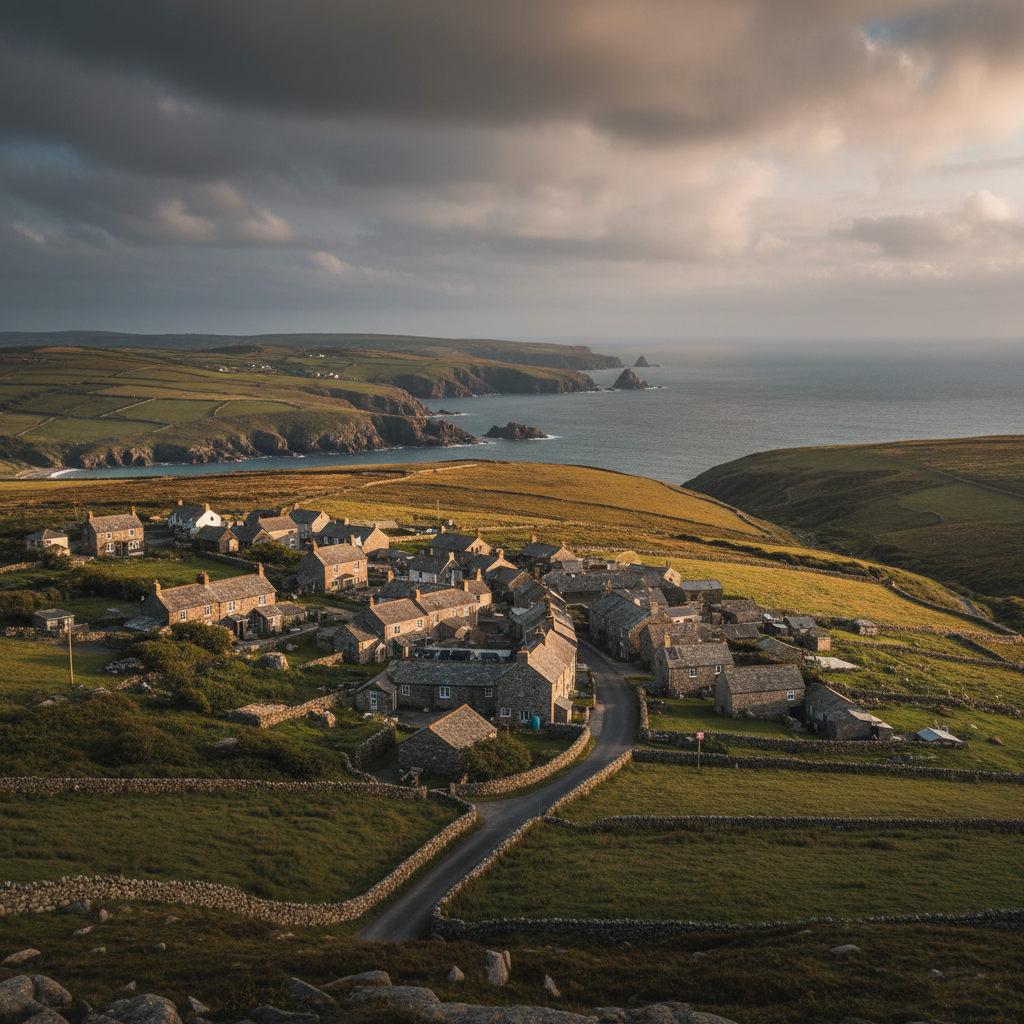
Mullion sits near the southern tip of the Lizard Peninsula, about four miles from Lizard Point itself, in a part of Cornwall that still feels genuinely apart. It is a working village, not a visitor village, and the distinction matters. The post office, the pub, the church, the small shops clustered around the centre: these things function because local people use them, not because tourists expect to find them. That gives Mullion a texture that many coastal settlements in Cornwall have slowly lost.
The village is set slightly inland, sheltered from the full exposure of the Atlantic by a low ridge, with Mullion Cove lying about a mile to the west down a winding lane. This positioning is characteristic of the Lizard: settlements here learned to sit back from the cliff edge, letting the coast be the coast and keeping the community somewhere it could actually function. Mullion follows that pattern. It has depth behind it, in the form of fields, lanes, and the broader emptiness of the Lizard plateau.
The community here has shaped a place with genuine continuity. The church of St Mellanus, thought to date from the thirteenth century, anchors the village historically, but it is the everyday rhythm that gives Mullion its character: the school run, the market day habit, the clusters of conversation outside the pub. Visitors tend to pass through on their way to the cove, which means those who pause and pay attention find a village going about its own life, largely undisturbed.
People come here primarily for the coast. The walking along this stretch of the South West Coast Path is among the most dramatic on the peninsula, with high cliffs, sea stacks, and a succession of small coves. Mullion serves as a useful and atmospheric base for that exploration, offering enough in the way of food, accommodation, and community life to make it somewhere to stay rather than simply somewhere to park.
Character
The feel of Mullion
The built character of Mullion is predominantly granite and slate, low-roofed and horizontal, built to resist weather rather than impress visitors. The village green and the area around the church give the settlement a loose, unhurried centre, with lanes radiating outward to farms and cottages. There is no grand civic architecture here, no Georgian terrace, no obvious focal point designed for display. The place accumulates rather than presents itself.
What gives Mullion its particular feel is the way the surrounding landscape presses in at every edge. The Lizard plateau is an unusual landform, relatively flat, botanically rich, and underlain by serpentine rock that gives the soil a distinctive reddish-brown cast. From the higher ground around the village, views open in several directions at once: west towards the sea, south towards the headland, east across the plateau. The landscape does not frame Mullion so much as contain it, holding the village within a broader emptiness that never quite lets you forget where you are.
That relationship between the village and its setting is what defines the experience of being here. Mullion is not isolated, but it is embedded. The coast is close enough to be part of daily life: visible from certain lanes, audible as wind on certain days. The plateau stretches away behind. The village occupies a middle ground, sheltered and rooted, between the open exposure of the clifftops and the long stillness of the interior.
First-hand visit
Keith's Take
Something about the way the village simply got on with itself, while the coast waited just over the hill, made it difficult to leave at the pace I'd planned.
A tractor pulling out of a farmyard on the lane towards the cove, unhurried, the driver raising a hand to no one in particular: that was the first thing that settled the character of Mullion for me. Not the cliffs, not the view, but that gesture of ordinary continuity, the village going about its morning while visitors organised themselves at the edges.
Moving through the lanes on foot, the village revealed itself in layers. The churchyard, where the grass between the stones was long and damp, and the tower above it looked out over rooftops towards a sky pressing down grey from the west. The junction near the pub where two women talked beside a parked car, unhurried, the conversation clearly not new and not in any danger of finishing. Then, gradually, the lane narrowing and the hedges thickening and the sea beginning to assert itself, not visible yet but present as a quality in the air and a change in the sound the wind made through the grass.
By the time the cove opened below, the serpentine walls of the inlet dark and wet with spray, I had a sense of Mullion as something more than a staging post. The village had its own gravity. The coast was extraordinary, and I stayed on the path until the light started to go, but the walk back up through the lanes, the lights on in the pub, the smell of something cooking, the tractor back in its yard: that felt like the completion of something, not just a return to the car park.
Keith's Take — a first-hand account from the 3moors team
Map & Getting Here
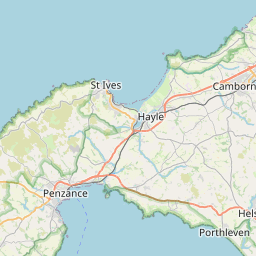
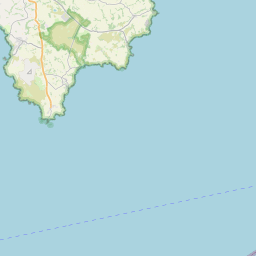
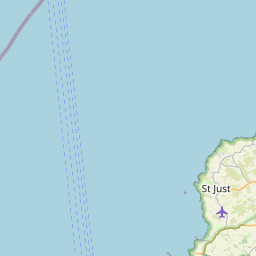
Getting to Mullion





What to expect
A natural way to spend time here
Coming into Mullion from the north, the road narrows gradually and the verges thicken with hedgerow, the occasional gate opening onto a field view before closing again. The village announces itself without spectacle: a cluster of buildings, a junction, the outline of the church tower. The scale is modest throughout, and the main streets are short enough that you can have a reasonable sense of the place within ten minutes of arriving.
On still days, particularly in spring, there is birdsong at a volume that can catch you off guard: chaffinches and blackbirds in the churchyard, house sparrows in the eaves around the pub. The air carries something from the sea, a faint salinity, more noticeable on days when the wind is from the west. In the lanes heading down towards the cove, the smell of gorse is strong enough in late April to be almost physical.
Mullion rewards a patient approach. The temptation is to pass straight through to the coast, and the coast is worth the hurry, but the village itself gives something back if you allow time to walk the outer lanes, look at the church, and sit somewhere long enough to watch what is actually happening around you. The pace of the place is its own, and it is not geared towards visitors. That is not unwelcoming
it is simply honest.
What makes it stand out
What makes Mullion special
What distinguishes Mullion from other coastal villages on the Lizard, and from many in Cornwall more broadly, is a combination of functional community life and genuine proximity to coastline that remains largely unmanaged. The cove to the west, with its National Trust harbour and harbour wall built in the late nineteenth century, is often busy in summer, but the clifftops above it and the coast path running north and south are frequently uncrowded even in peak season. The village itself acts as a kind of filter: those who go no further than the car park at the cove miss most of what the walking offers.
The underlying geology gives this part of the peninsula a quality found nowhere else in England. The serpentinite and gabbro of the Lizard create unusual soils that support plant communities entirely unlike those found elsewhere on the south-west coast path. The clifftop grassland near Mullion has a close, springy texture underfoot, and the colour of exposed rock varies from deep green to rust-red depending on the light. That specificity is not incidental: it is what makes a walk here feel different from a walk almost anywhere else.
Don't miss
Things to see and do
Walk the lane from the village down to Mullion Cove and look back at the cliffs from the harbour wall before the day-trippers arrive.
Follow the South West Coast Path south from the cove towards Predannack Head, where the clifftops open out and the scrub gives way to short, exposed grassland.
Look at the carved bench ends inside St Mellanus church, which are among the more quietly striking pieces of medieval woodwork in Cornwall.
Scan the sea from the higher cliff sections for grey seals, which haul out on the rocks below the path year-round.
Walk north from the cove along the coast path towards Poldhu, where the clifftop dips into a valley and the Marconi memorial sits in a field overlooking the Atlantic.
Take the lane east from the village and follow the field paths out onto the plateau, where the Lizard opens up in a way that is entirely unlike the coast below.
Sit on the harbour wall at Mullion Cove in low light and watch the light shift on the serpentine rock faces of the inlet.
Walks from here
Getting out from Mullion
The most immediate walking from Mullion is the lane route down to the cove, about a mile on a quiet road, with a footpath alternative cutting across the field above. From the cove, the South West Coast Path runs in both directions along clifftops that are genuinely dramatic: south towards Predannack and the Rill, north towards Poldhu and Gunwalloe. A circular route combining the coast path north with the inland return through Cury or across the plateau is achievable in half a day and covers a satisfying variety of terrain.
For those interested in the plateau rather than the cliff, the lanes and field paths east of the village lead into the broader Lizard interior, past smallholdings and rough pasture, with views across to Goonhilly and the satellite dishes that mark the skyline in that direction. This is quieter walking, less scenically dramatic but with its own character. The hedgerows on the plateau lanes are botanically rich in season, and the light has an unusual quality on clear days, the flatness of the land meaning the sky takes up more of the view than you might expect from a coastal location.
Good to know
Before you go
Mullion Cove car park fills quickly on summer weekends. Arriving before nine in the morning makes a practical difference, particularly in July and August. The village itself has more limited parking, but the main car park off the central lanes is generally manageable outside peak hours. The cliff paths south of the cove can be wet and slippery in wet weather
the rock type here is unusually smooth when damp and care is needed at certain points close to the edge.
The South West Coast Path along this section is well-signed but in places follows routes that are closer to the cliff edge than the official path markers suggest. A current OS map or a reliable mapping app is more useful than relying on signage alone. Mobile signal is variable across the Lizard plateau and along some stretches of the coastal path.
Across the seasons: Spring is the most rewarding season for the clifftop walking. The gorse is at its peak from late March into May, and the short grassland on the cliff edge supports early flowering plants, including species confined to this specific geology, that are gone by midsummer. Seabirds are active on the offshore rocks from April onwards, and the light in May has a particular clarity that suits the exposed landscape well. Summer brings visitors to the cove in significant numbers, and the lane from the village to the harbour becomes busy from late morning. The village itself absorbs the pressure better than the cove, and there are days in July when Mullion feels calm while Mullion Cove is crowded. Autumn returns the landscape to something closer to its usual character: the bracken on the cliffs turning copper-brown by mid-October, the coast path quieter, the sea more volatile. Winter walks from here require appropriate preparation but are rarely impossible; the Lizard's mild climate means the paths stay walkable through most of the season, and the coast in a westerly gale is an experience in itself.
Local weather
Practical info
Practical info
Mullion has a small public car park near the village centre, but spaces fill quickly in summer, particularly at weekends and during school holidays. Street parking in the village itself is limited and the narrow lanes are shared with local residents and working vehicles. If the main car park is full, it is worth arriving early or waiting rather than blocking access roads. There is a separate car park at Mullion Cove, roughly a mile from the village, which is managed by the National Trust.
The village has a pub, a post office, and a small selection of shops that cover basic provisions. Public toilets are available near the village car park, though hours and condition vary by season. Mullion Cove has additional facilities in the summer months, but visitors should not assume these will be open outside the main season. There are no large supermarkets or visitor centres in the village itself.
The village is easy to move around on foot, but the coastal paths nearby involve significant gradients and can be uneven underfoot. Clifftop sections south of Mullion Cove are exposed to Atlantic weather and can be slippery after rain. Stout footwear is strongly advisable for any walking beyond the village lanes. Some coastal path sections close to the cliffs require care, particularly in high winds or low visibility.
varies
Explore nearby
Places nearby
Porthleven
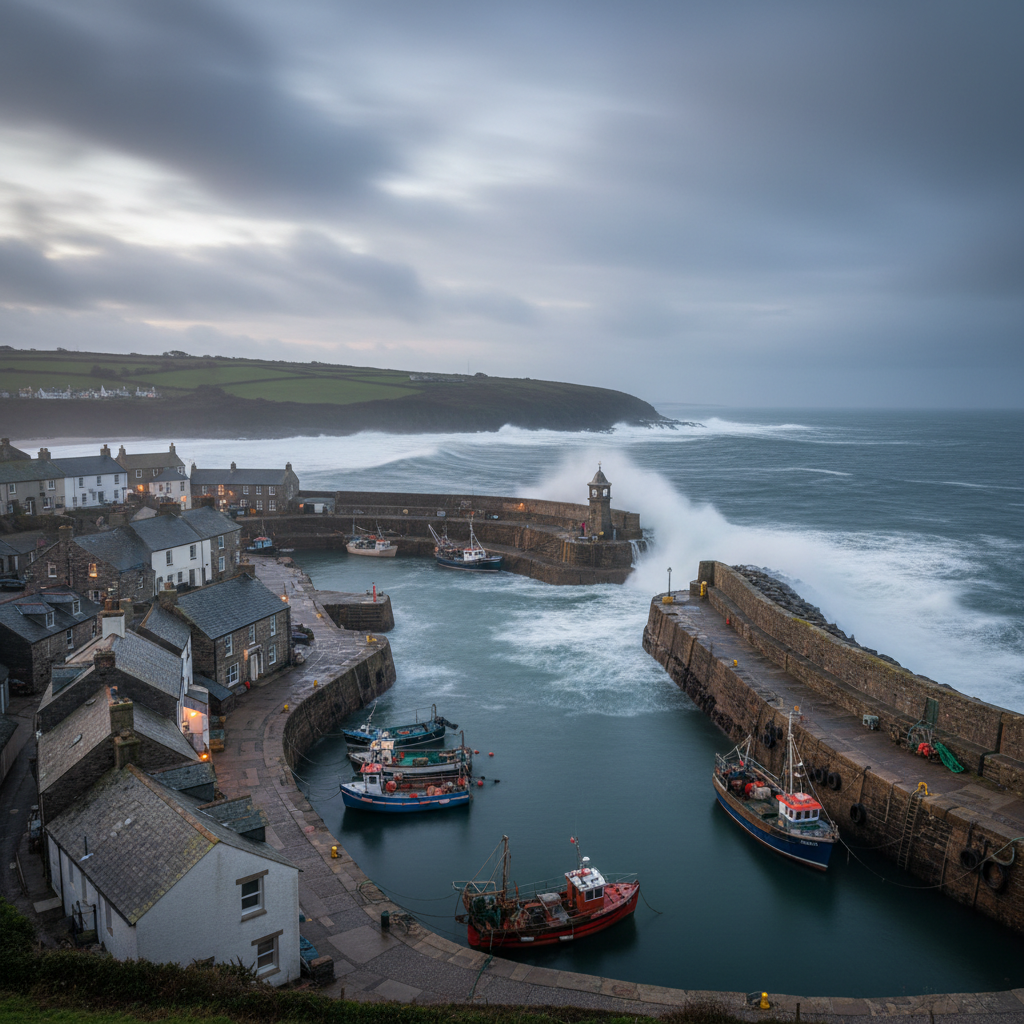
Porthleven offers one of Cornwall’s strongest combinations of harbour atmosphere and Atlantic power.
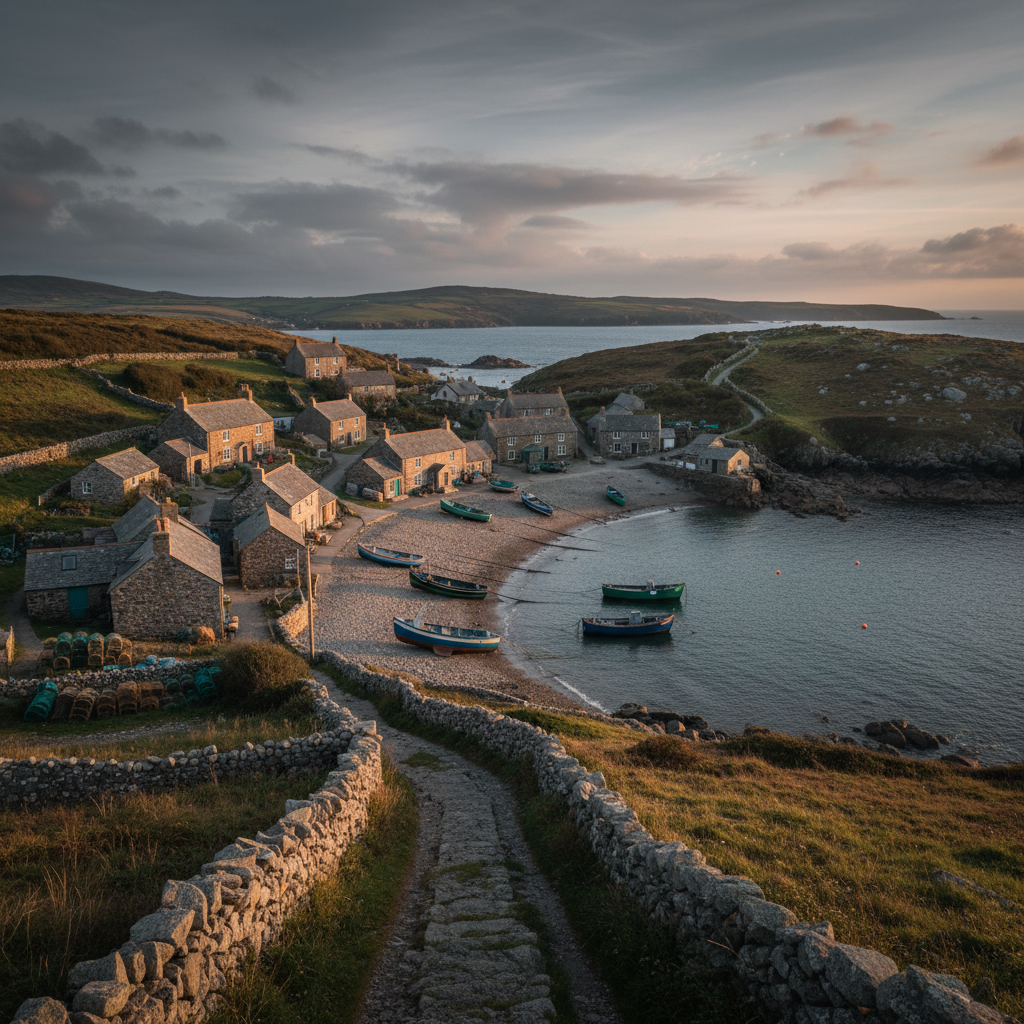
Cadgwith
Cadgwith feels quieter, older and less polished than many Cornish coastal villages.
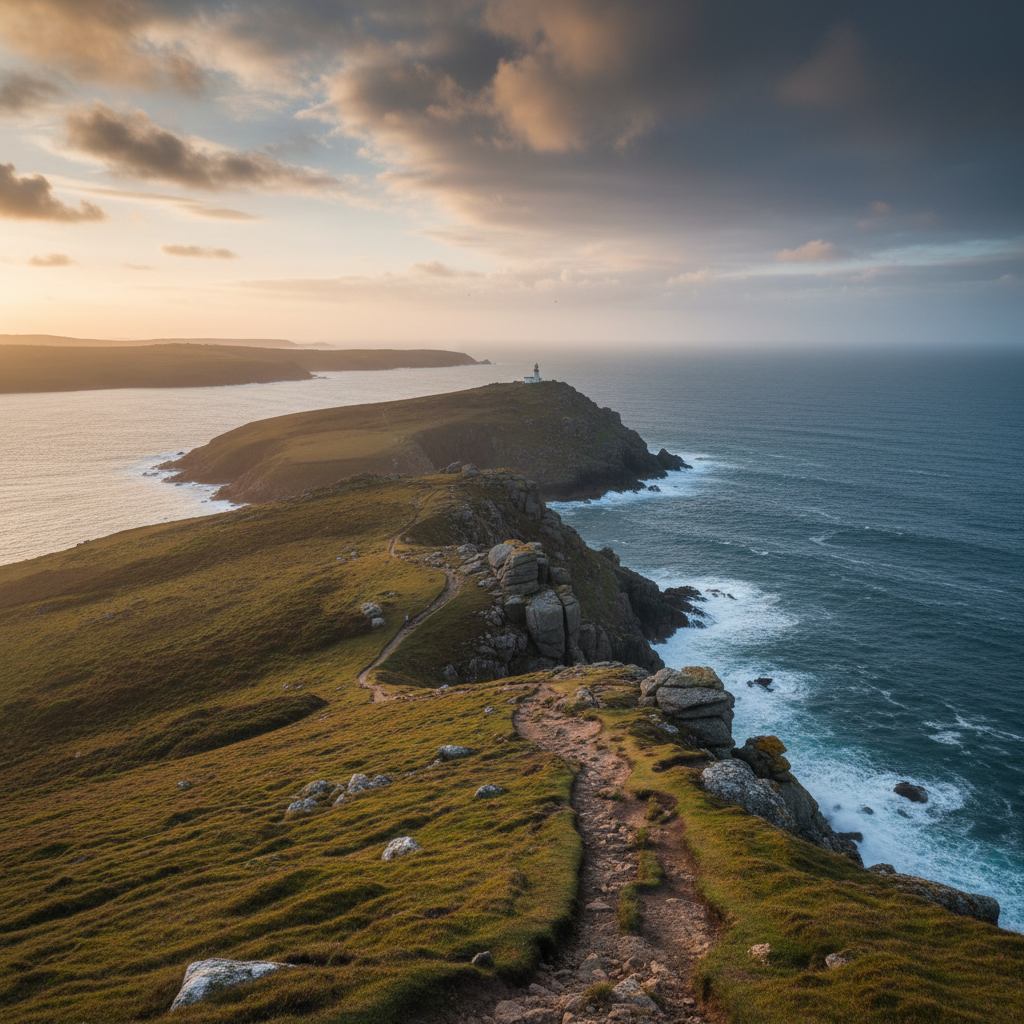
Lizard Point
Lizard Point offers rugged scenery, wildlife and a strong sense of Atlantic exposure.
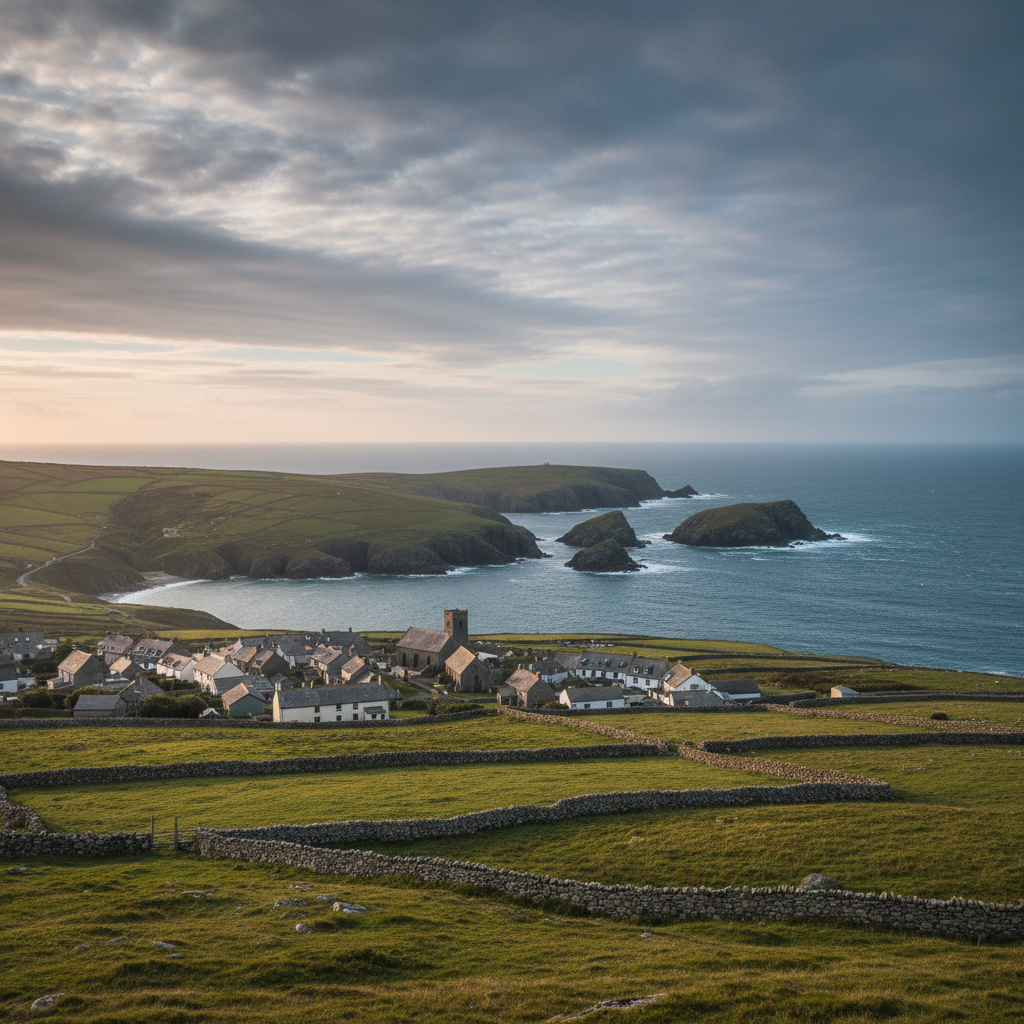
Mullion
Mullion combines village atmosphere with access to some of Cornwall’s wildest coastline.
Join the 3moors Community for path conditions & local tips.
JoinWhy this place matters
Mullion — in its own right
What Mullion offers, in the end, is a version of Cornwall that operates on its own terms. The village has not reorganised itself around the visitor economy; it has simply remained what it was, a community in a particular place, shaped by work, weather, and proximity to a coastline that demands respect rather than admiration. There is something in that which is harder to find than it once was. The local character of the place does not announce itself. It emerges in small details: the way the pub fills with people who know each other, the battered notice board outside the church, the farmer's gate propped open with a stone in a lane that sees perhaps four walkers a day. Mullion is not performing a version of itself for anyone's benefit. That absence of performance is, in its own way, the most distinctive thing about it.
Explore more
Discover other places, walks, and hidden corners across Bodmin Moor.