We use essential cookies to keep the site working. Non-essential cookies help us improve your experience and understand how you use the site. You can accept or reject non-essential cookies at any time. Learn more
When to head out if you want a better chance of seeing wildlife on Dartmoor — from dawn birdsong to dusk deer watching.
Q&Adartmoordevon
TypeWildlife Guide
Q&A
Moordartmoor
Countydevon
Quick Answer
<p>Early morning and dusk are usually the best times to see wildlife on Dartmoor. Birds of prey can be easier to spot later in the morning when warm air helps them soar, while skylarks are most noticeable on calm spring and summer mornings.</p><p>If wildlife is your main reason for being out, aim for the first couple of hours after dawn or the hour before dark. Midday is the quietest time for most species.</p>
Introduction
<p>Wildlife on Dartmoor follows the rhythm of light, weather and disturbance. The time you visit can completely change what you see.</p><p>Midday walks can still be beautiful, but if wildlife is your focus, the edges of the day are usually better. A two-hour walk starting at dawn will often produce more than a six-hour walk starting at noon.</p><p>This guide works through the day and explains what each part of the day tends to offer — and what you can reasonably hope to see.</p>
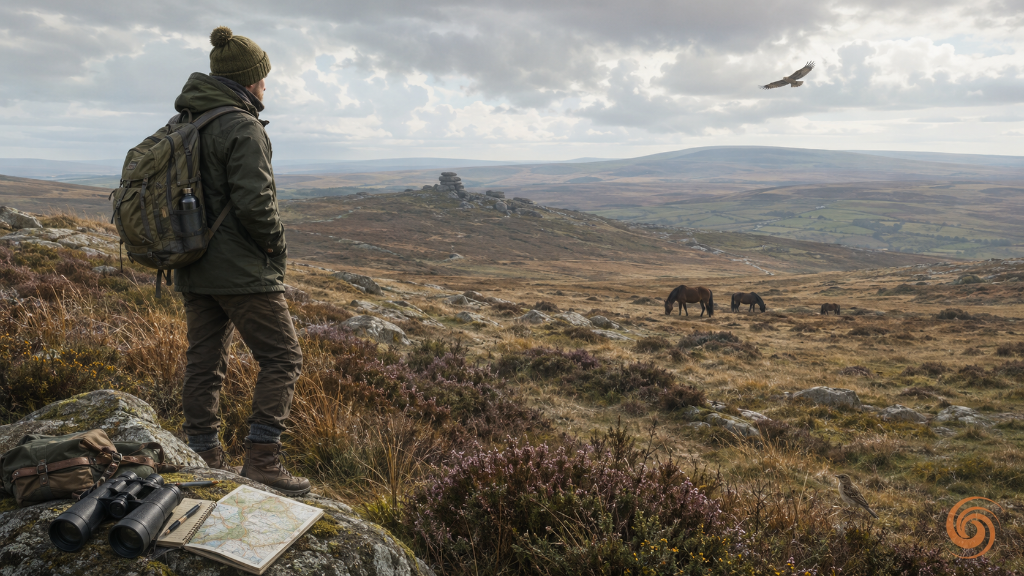
<h2>Before you head out</h2><p>Think about what you most want to see. If it is birds of prey, late morning may suit you better than dawn. If it is deer, dusk or very early morning are your best chances. If it is skylarks and general birdsong, early morning in spring and early summer is the obvious choice.</p><p>Also consider weather and wind. A calm, mild morning is far better for wildlife observation than a cold, windy one. Strong wind suppresses bird activity and makes it harder to hear calls. Rain just before or just after a still period often encourages movement.</p><p>Dartmoor can change quickly. Plan your timing, but also plan your route and safety.</p><h2>Early morning</h2><p>Early morning is often the best time overall for wildlife on Dartmoor. The moor is quieter, light is softer, and animals are more likely to be moving before the day becomes busy.</p><p>Skylarks are typically most active in the early morning during spring and early summer, with song pouring down from above before most visitors have left the car park. Meadow pipits call constantly. Stonechats flick between gorse stems. Deer may still be visible on open slopes before retreating to cover.</p><p>Dartmoor ponies are often more settled in the early morning, grazing calmly before the day's traffic picks up.</p><ul><li><strong>Best for:</strong> skylarks, meadow pipits, stonechats, deer, foxes, general birdsong</li><li><strong>When:</strong> dawn to around two hours after sunrise</li><li><strong>Conditions:</strong> calm mornings are better than windy ones</li><li><strong>Tip:</strong> choose quieter car parks and less busy starting points</li></ul><h2>Late morning</h2><p>As the morning progresses and the air begins to warm, thermals start to develop over the moor. This is when buzzards and other birds of prey become easier to spot.</p><p>Buzzards soar effortlessly once thermals are established, circling high above valleys and open ground. Ravens may also become more active. Both are often visible by mid-morning even when other species have gone quiet.</p><ul><li><strong>Best for:</strong> buzzards, ravens, red kites (where present), soaring raptors</li><li><strong>When:</strong> from around two to three hours after sunrise</li><li><strong>Tip:</strong> use open viewpoints with wide sky views — scan high and in wide arcs</li></ul><h2>Afternoon</h2><p>Afternoons are generally the quietest time for wildlife on Dartmoor. Most mammals are resting. Birdsong is reduced. The moor can feel emptier than it did in the morning.</p><p>That said, Dartmoor ponies, cattle and sheep continue to graze throughout the day and are easy to observe at any time. Buzzards and ravens may remain visible if the air is still warm.</p><ul><li><strong>Best for:</strong> Dartmoor ponies, grazing animals, general landscape observation</li><li><strong>Tip:</strong> use the afternoon to position yourself for a good dusk spot</li></ul><h2>Dusk</h2><p>Dusk can be excellent, especially for deer and foxes. As light fades, mammals that have rested during the day become active again. Woodland edges, valley sides and quieter parts of the moor become more productive.</p><p>Owls may become active near woodland at dusk. Short-eared owls are occasionally seen hunting low over open ground in the late afternoon and early evening.</p><p>Dartmoor can be difficult after dark — navigation is harder and phone signal is unreliable in many areas. Plan your route carefully and know how to get back before light fails.</p><ul><li><strong>Best for:</strong> deer, foxes, owls, bats</li><li><strong>When:</strong> the hour before and after sunset</li><li><strong>Caution:</strong> plan your route — do not rely on phone signal alone after dark</li><li><strong>Tip:</strong> choose accessible locations near car parks for dusk watching</li></ul><h2>After rain</h2><p>Fresh, damp conditions after a rain shower often encourage wildlife activity. Birds may become vocal again after sheltering. Deer may move into the open. Damp ground also makes it easier to spot tracks, droppings and other signs of animal presence — particularly in mud at stream crossings and boggy areas.</p><ul><li><strong>Best for:</strong> renewed bird activity, tracks and signs, general observation</li><li><strong>Tip:</strong> look at stream crossings and soft ground for animal prints</li></ul><h2>Seasonal differences</h2><p><strong>Spring (March–May):</strong> the richest season for birdsong and activity. Skylarks, meadow pipits and curlews are all active. Early morning from April onwards is particularly good.</p><p><strong>Summer (June–August):</strong> birdsong diminishes through June as nesting ends, but early mornings remain quieter and cooler. Best to be out early before visitor numbers build.</p><p><strong>Autumn (September–November):</strong> deer are most noticeable, particularly on Exmoor during the rut. On Dartmoor, autumn morning light and valley mist can make any walk feel atmospheric. Buzzards and ravens remain active.</p><p><strong>Winter (December–February):</strong> fewer species, but cleaner views through bare trees. Ravens, buzzards and red kites are visible. Dartmoor ponies are often easier to observe in winter as ground vegetation is lower.</p><h2>Weather and conditions</h2><p>Calm conditions are almost always better for wildlife observation than windy ones. Wind suppresses bird activity, makes it harder to hear calls, and tends to push animals into cover.</p><p>After a cold, clear night, mornings can be very good — especially in spring when temperature rises encourage insect activity, which in turn brings birds.</p><p>Hot, sunny afternoons are the least productive time of the day for most wildlife. If heat is forecast, head out early and be back before midday.</p><h2>Practical notes</h2><p>If you are planning an early morning walk on Dartmoor, research your parking location in advance. Some car parks open late or require payment from a time that may not suit a dawn start.</p><p>Quieter routes and lesser-used paths are almost always better for wildlife than busy main trails. Even a short distance from a popular starting point can make a noticeable difference.</p><p>Take a map and compass. Early morning mist and limited visibility are common on Dartmoor, especially in autumn and winter. Do not rely on phone signal or GPS alone.</p>
3moors Community
Recent conditions or questions about this walk?
Join the 3moors Community to ask about path conditions, parking, wildlife sightings and local tips.

 Wildlife
 Wildlife
 Wildlife
 Wildlife