We use essential cookies to keep the site working. Non-essential cookies help us improve your experience and understand how you use the site. You can accept or reject non-essential cookies at any time. Learn more
A sound-led guide to moorland wildlife — from skylarks above you to buzzards calling across valleys.
Q&Aallall
TypeWildlife Guide
Q&A
Quick Answer
<p>Skylarks, buzzards and red deer are among the wildlife you may hear before you see on the moors. Sound is one of the best ways to notice life in open landscapes where animals are often distant, hidden or high in the sky.</p>
<p>Slow down, stop often and listen. Your ears will find things your eyes have already passed over.</p>
Introduction
<p>On the moors, your ears often notice wildlife before your eyes do.</p>
<p>A skylark may be singing high above you before you think to look up. A buzzard may be calling from somewhere across the valley before you spot it circling. In autumn on Exmoor, a red deer stag may roar before you ever pick him out on the hillside.</p>
<p>Open landscapes can trick the eye. Wildlife may be distant, still, or hidden by colour and shape. Sound gives you a direction, a clue, and a reason to stop.</p>
<h2>Before you head out</h2>
<p>If you want to make more of moorland sound, try to move more quietly than you might otherwise. Stop regularly. Let the landscape settle. A few minutes of stillness can reveal birdsong, calls and movement that a continuous walk will mask.</p>
<p>You do not need specialist equipment. Most moorland sounds are audible in normal conditions. But wind can mask sound, especially on exposed high ground. Sheltered valleys, combes and woodland edges are often quieter and richer.</p>
<p>Early morning is often the best time. Many birds call most actively before mid-morning, especially in spring and early summer.</p>
<h2>Skylarks</h2>
<p>The skylark is the defining sound of open moorland in spring and early summer. The song pours down continuously from high above — a complex, liquid stream of notes that can last for several minutes without a pause.</p>
<p>The bird is tiny and the sky is large. Look carefully once you have located the direction of the sound and you may spot a small hovering shape above the grassland or heath.</p>
<p>Skylarks sing while ascending, hovering and descending. The song fades as they drop back into cover.</p>
<ul><li><strong>Where:</strong> open grassland, heathland, rough moorland</li><li><strong>When:</strong> spring and early summer, from first light</li><li><strong>Sound:</strong> continuous, complex, musical — pouring down from overhead</li><li><strong>What to do:</strong> stop, look up and scan slowly</li></ul>
<h2>Buzzards</h2>
<p>The buzzard's mewing call is one of the most familiar sounds over valleys, farmland edges and open moorland. It is a high, plaintive sound — something between a cat and a hawk — and it often comes from a bird already high and circling.</p>
<p>If you hear a buzzard, look high and wide. They often soar effortlessly on thermals, barely moving their wings. The sound can carry a long way, and the bird may not be where you first look.</p>
<ul><li><strong>Where:</strong> above valleys, woodland edges, open hillsides</li><li><strong>When:</strong> most of the year, especially mid-morning as air warms</li><li><strong>Sound:</strong> a drawn-out mewing or cat-like call, often repeated</li><li><strong>What to do:</strong> scan the sky in wide arcs before focusing</li></ul>
<h2>Ravens</h2>
<p>Ravens have a deep, resonant cronk or pruk call that carries well across open ground. It sounds nothing like a crow — it is deeper, rougher and more authoritative.</p>
<p>Ravens are large and often visible, but the call can alert you to their presence before you notice them. They may be circling, perching on tors, or moving between ridges.</p>
<ul><li><strong>Where:</strong> tors, ridges, open moorland, valleys</li><li><strong>When:</strong> year-round</li><li><strong>Sound:</strong> deep, hollow cronk or repeated harsh notes</li><li><strong>What to do:</strong> scan tors and high points — ravens often perch prominently</li></ul>
<h2>Curlews</h2>
<p>The curlew's call is one of the most evocative sounds of wild places. It is a rising, bubbling whistle that carries far across moorland and estuary alike.</p>
<p>Curlews are large wading birds that use moorland for nesting and feeding. Their call can sometimes be heard before the bird comes into view crossing the skyline or probing wet ground.</p>
<ul><li><strong>Where:</strong> wet moorland, grassland edges, valley bottoms</li><li><strong>When:</strong> spring is best, but present at other times</li><li><strong>Sound:</strong> long, rising bubbling whistle — unmistakable once heard</li><li><strong>What to do:</strong> look across wet ground and valley floors for movement</li></ul>
<h2>Meadow pipits</h2>
<p>Meadow pipits are among the most common moorland birds, and their thin, high call is a constant background sound on open ground. They often call in flight — a series of thin, high-pitched notes as they rise and parachute back down.</p>
<p>They are easy to overlook but worth learning. Once you recognise the call, you begin to realise how many are present even in areas that seemed quiet.</p>
<ul><li><strong>Where:</strong> open grassland, heath, rough moorland</li><li><strong>When:</strong> spring through summer, most active</li><li><strong>Sound:</strong> thin, high-pitched, repetitive — often in short bursts</li><li><strong>What to do:</strong> watch for small birds rising from grass and parachuting down</li></ul>
<h2>Red deer</h2>
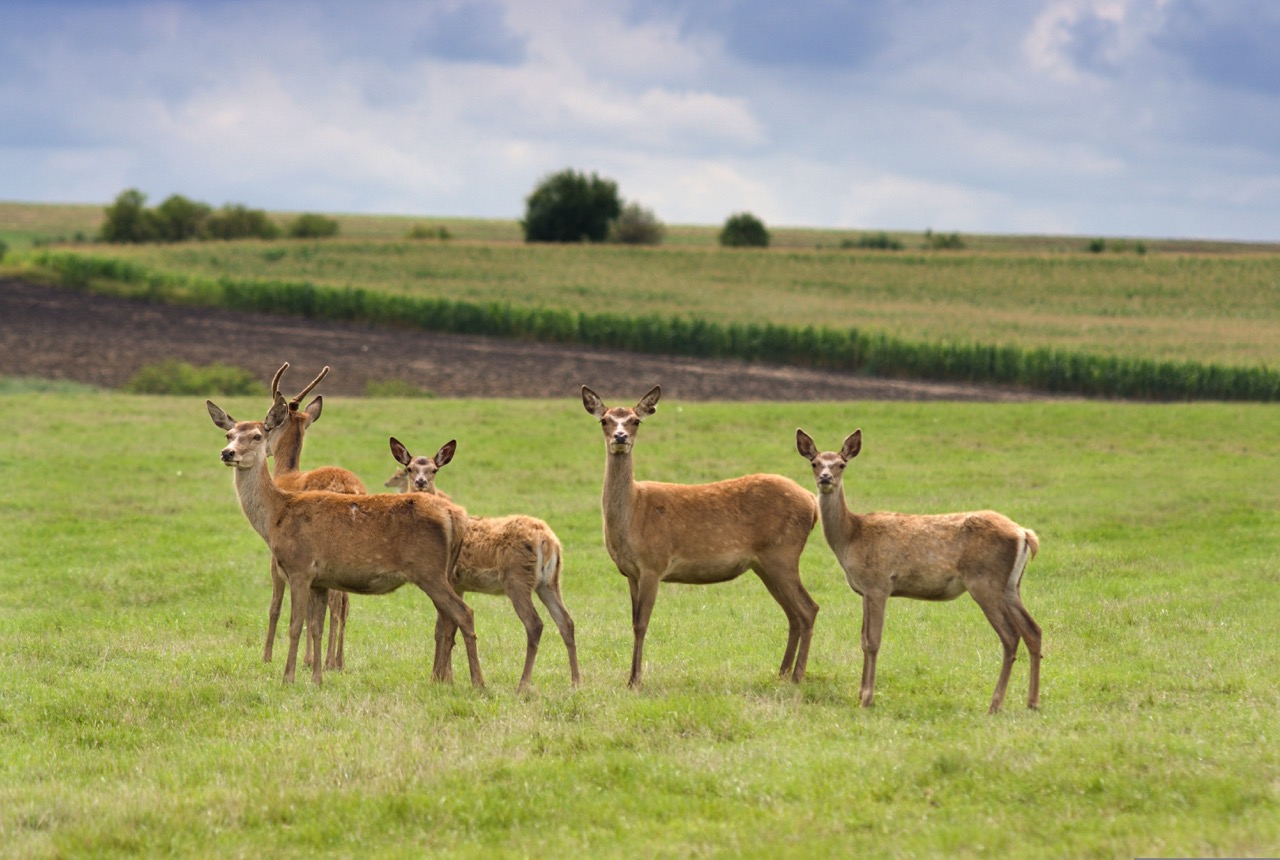
<p>During the autumn rut, red deer stags produce a deep, guttural roar that can carry across Exmoor valleys. It is one of the great wildlife sounds of the South West — raw, powerful and atmospheric.</p>
<p>The roar is a challenge to rival stags and a signal to hinds. You may hear it echoing from slopes or valley sides before you see any movement at all.</p>
<p>Do not approach rutting deer. Keep well back and use binoculars. The sound alone is an experience worth going out for.</p>
<ul><li><strong>Where:</strong> Exmoor valleys, open slopes, quiet combes</li><li><strong>When:</strong> autumn rut, typically October</li><li><strong>Sound:</strong> deep, hoarse roar — sometimes building to a bellow</li><li><strong>What to do:</strong> scan slopes and valley edges from a respectful distance</li></ul>
<h2>Owls</h2>
<p>Owls are more often heard than seen, especially at dusk and after dark. Tawny owls call from woodland edges, sheltered valleys and quiet lanes — the familiar tu-whit, tu-whoo is actually a pair calling back and forth.</p>
<p>Barn owls are quieter but may produce a rasping shriek. Short-eared owls, which use open moorland, are occasionally visible hunting low over ground in late afternoon and evening.</p>
<ul><li><strong>Where:</strong> woodland edges, quiet lanes, sheltered valleys</li><li><strong>When:</strong> dusk and early night</li><li><strong>Sound:</strong> tawny owl hooting; barn owl occasional shriek; short-eared owl occasional bark</li><li><strong>What to do:</strong> stop near woodland edges at dusk and listen</li></ul>
<h2>Stonechats</h2>
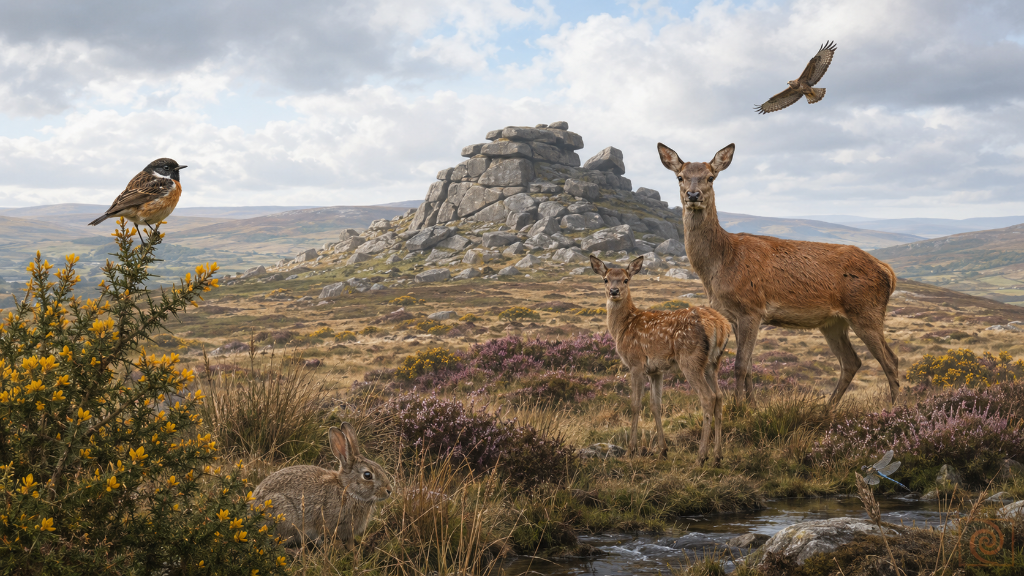
<p>The stonechat's alarm call is a sharp, clicking sound — like two stones being struck together, which is exactly how it got its name. It is often heard from gorse, bracken and heathland, where stonechats perch prominently and call repeatedly.</p>
<p>The call is not dramatic but it is distinctive. Once you know it, you will notice stonechats everywhere along moorland edges and coastal heaths.</p>
<ul><li><strong>Where:</strong> gorse and bracken, heathland, moorland edges, coastal areas</li><li><strong>When:</strong> year-round</li><li><strong>Sound:</strong> sharp, clicking tack-tack — like striking stones</li><li><strong>What to do:</strong> look for a small upright bird perched on top of gorse or bracken</li></ul>
<h2>Cuckoos</h2>
<p>The cuckoo's call needs no introduction. In spring, it can be heard across open moorland, woodland edges and valley sides. It is one of the earliest seasonal sound markers of the year — unmistakable and always welcome.</p>
<p>Cuckoos are often heard at distance. Finding the bird itself takes patience, as they tend to stay partially hidden in trees and scrub.</p>
<ul><li><strong>Where:</strong> moorland edges, woodland, scrub, valley sides</li><li><strong>When:</strong> spring and early summer</li><li><strong>Sound:</strong> the familiar cuckoo call — two clear notes, the second lower</li><li><strong>What to do:</strong> listen for direction and scan trees and hedgerow perches</li></ul>
<h2>How to use sound when you are out</h2>
<p>Stop regularly, especially when you reach open ground or a viewpoint. Let at least a minute pass in stillness before moving on.</p>
<p>Try to identify the direction of any sound before moving. Sound in open landscape can seem to come from multiple directions at once, but taking a moment usually reveals a clear source.</p>
<p>Use sound as a reason to look, not just listen. Most sounds that are worth investigating have a visual source nearby — a hovering skylark, a circling buzzard, a stonechat on a gorse stem.</p>
<p>Wind is the enemy of moorland sound. On exposed days, move into shelter where possible. Combes, valley sides, woodland edges and sheltered tracks are better for listening than open ridges in a strong breeze.</p>
<h2>Seasonal sound guide</h2>
<p><strong>Spring:</strong> skylarks, meadow pipits, cuckoos, curlews — the richest season for moorland birdsong. Start early.</p>
<p><strong>Summer:</strong> birdsong gradually quietens as nesting ends, but buzzards, ravens and stonechats remain active.</p>
<p><strong>Autumn:</strong> the red deer rut on Exmoor is the great seasonal sound event. Quieter for birds, but atmospheric in other ways.</p>
<p><strong>Winter:</strong> fewer sounds, but ravens, buzzards and occasionally red kites are active. Frost and clear air can carry sound further.</p>
<h2>A few sounds worth learning</h2>
<p>You do not need to identify everything. Even recognising three or four common moorland sounds makes a walk noticeably richer.</p>
<p>Start with: skylark (continuous song from above), buzzard (mewing call from high), raven (deep cronk), stonechat (clicking), and meadow pipit (thin high notes in flight). These five will cover a large proportion of what you hear on any moorland walk.</p>
3moors Community
Recent conditions or questions about this walk?
Join the 3moors Community to ask about path conditions, parking, wildlife sightings and local tips.

 Wildlife
 Wildlife
 Wildlife
 Wildlife