We use essential cookies to keep the site working. Non-essential cookies help us improve your experience and understand how you use the site. You can accept or reject non-essential cookies at any time. Learn more
A simple checklist of what to bring if you want to spot more wildlife on the moors, from binoculars to clothing, timing and patience.
Q&Aallall
TypeWildlife Guide
Q&A
Quick Answer
<p>For wildlife spotting on the moor, bring binoculars, suitable layered clothing, sturdy footwear, water, a small snack, and enough time to move slowly. You do not need expensive specialist gear. The most useful things are comfort, patience, quiet movement and the ability to stop, watch and listen.</p>
Introduction
<p>You don't need to arrive on the moor dressed like a professional naturalist to enjoy wildlife. Most sightings come from ordinary things done well: walking quietly, keeping warm, staying dry, choosing the right time of day and giving the landscape time to settle around you.</p>
<p>A few simple items can make a big difference. They help you stay out longer, watch from a respectful distance and notice movement you would otherwise miss.</p>
<h2>Before you head out</h2>
<p>The moors are open, exposed and changeable. Weather can shift quickly, ground can be wet underfoot, and wildlife rarely appears on demand. Pack for comfort first. If you are cold, wet, rushed or uncomfortable, you will not stay still long enough to see much.</p>
<p>Think of wildlife spotting as slow walking with pauses. You are not trying to cover miles. You are trying to give the moor time to reveal itself.</p>
<h2>Binoculars</h2>
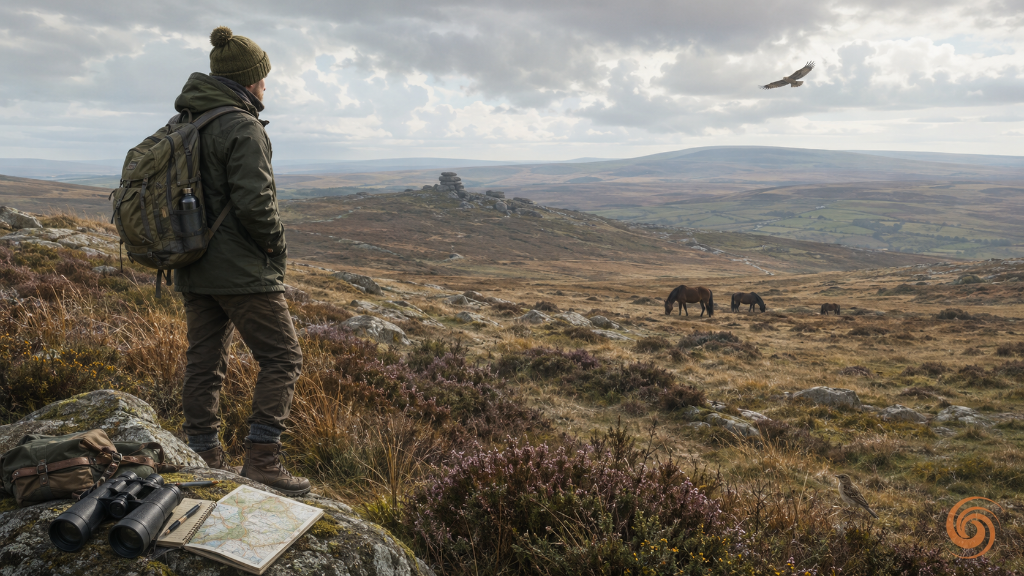
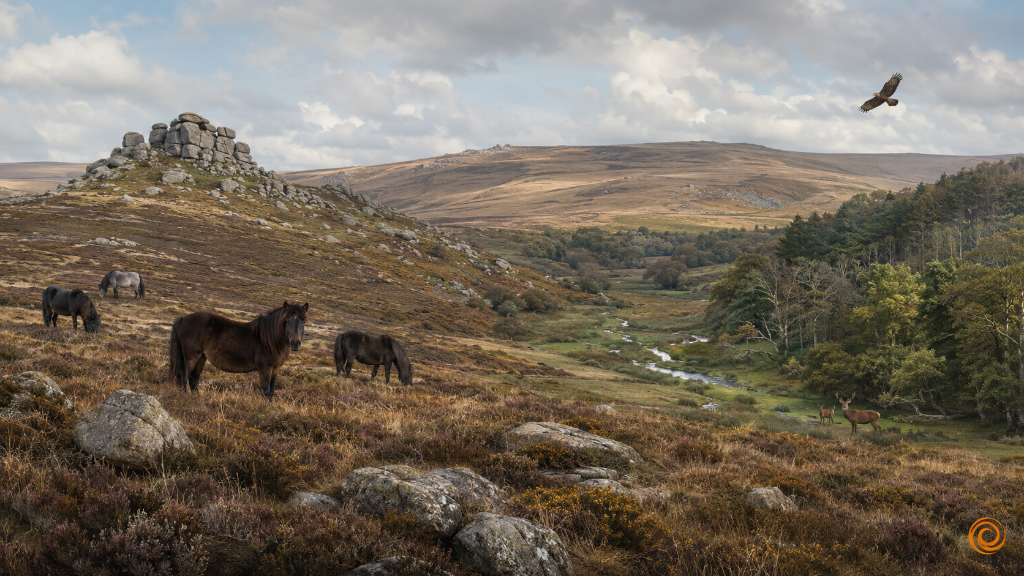
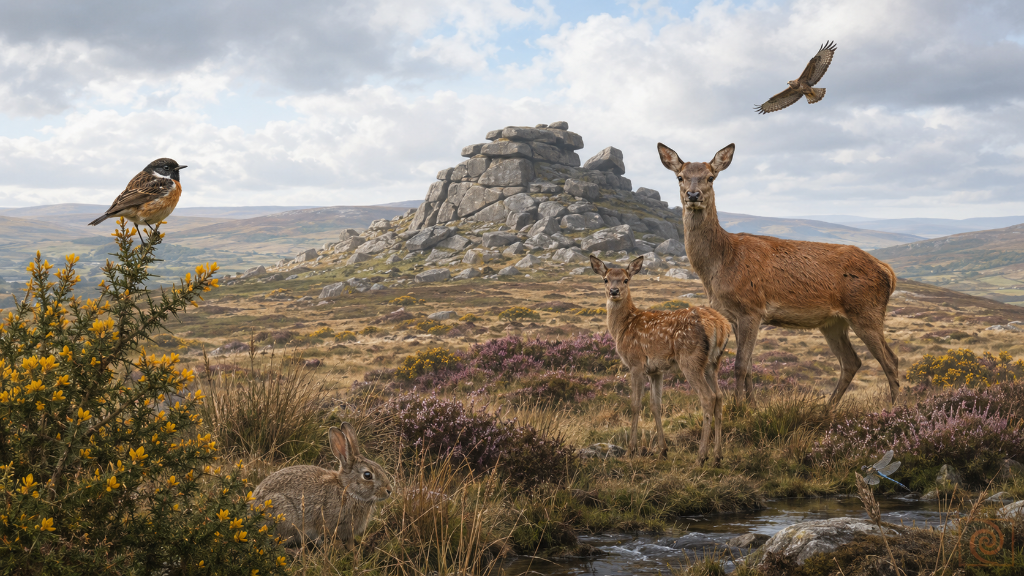
<p>A simple pair of binoculars can completely change what you see. Birds of prey circling over a valley, deer on a distant slope, ponies on the skyline, or a small bird flicking between gorse bushes all become easier to identify and enjoy.</p>
<p>You do not need a large or expensive pair. Lightweight binoculars are often better for casual walks because you are more likely to carry them.</p>
<ul><li><strong>Useful for:</strong> birds, deer, distant ponies, movement across valleys</li><li><strong>Tip:</strong> keep them somewhere easy to reach, not buried at the bottom of your bag</li></ul>
<h2>Clothing layers</h2>
<p>Layered clothing is one of the most important things to bring. The moor can feel warm in shelter and cold within minutes once the wind rises. A light waterproof or windproof layer is worth carrying even when the forecast looks kind.</p>
<p>Comfort matters because wildlife watching often means standing still. You may feel perfectly warm while walking, then cool down quickly when you stop to watch a bird, scan a valley or wait quietly near a stream.</p>
<ul><li><strong>Bring:</strong> base layer, fleece or warm layer, waterproof/windproof outer layer</li><li><strong>Avoid:</strong> relying on one thick coat that becomes too hot while walking</li></ul>
<h2>Footwear</h2>
<p>Wear sturdy, comfortable footwear with decent grip. Moorland ground can be uneven, wet, rocky or boggy, and even short walks can involve rougher conditions than expected.</p>
<p>Good footwear lets you move more quietly and confidently. It also means you are more likely to explore slowly rather than rushing back because your feet are wet or sore.</p>
<ul><li><strong>Best choice:</strong> walking boots or sturdy trail shoes</li><li><strong>Watch for:</strong> wet grass, mud, rocks, hidden holes and slippery paths</li></ul>
<h2>Water and snacks</h2>
<p>Wildlife watching often takes longer than planned. A short stroll can easily turn into an hour of watching buzzards, listening to skylarks or waiting for movement around a valley edge.</p>
<p>Carry water and a small snack so you can slow down without needing to cut the visit short.</p>
<ul><li><strong>Good options:</strong> water bottle, fruit, oat bar, sandwich, flask in colder months</li></ul>
<h2>A small notebook or phone notes</h2>
<p>A notebook is useful if you want to remember what you saw, where you saw it and what time of day it appeared. Over time, this helps you build your own understanding of the moor.</p>
<p>You can also use your phone, but keep it quiet and avoid spending the whole walk staring at a screen.</p>
<ul><li><strong>Note down:</strong> species, location, weather, time, behaviour and anything unusual</li></ul>
<h2>Camera or phone</h2>
<p>A camera can help you record sightings, but it should not become the whole point of the walk. Some of the best wildlife moments are brief. Enjoy them first, photograph them second.</p>
<p>If using a phone, avoid moving too close to wildlife for a picture. A poor distant photo is better than disturbing an animal.</p>
<ul><li><strong>Tip:</strong> use zoom sparingly and keep your movements slow</li></ul>
<h2>Map or navigation app</h2>
<p>If you plan to explore quieter routes, valleys or less busy areas, take a proper map, GPS app or downloaded route. Wildlife is often easier to see away from the busiest paths, but the moor can be confusing in mist, poor light or bad weather.</p>
<p>Do not rely entirely on signal. Download maps before you go.</p>
<ul><li><strong>Bring:</strong> OS map, GPS app, compass if you know how to use one, or a saved 3moors route</li></ul>
<h2>Timing</h2>
<p>Timing is as important as kit. Early morning and dusk are usually best for quieter wildlife. Birds are often more active in the morning, while deer, foxes and rabbits are more likely to be seen when fewer people are around.</p>
<p>Birds of prey, such as buzzards, may be easier later in the morning once rising warm air helps them circle.</p>
<ul><li><strong>Best times:</strong> early morning, dusk, quiet weekdays, out-of-season days</li><li><strong>Best approach:</strong> arrive slowly, stop often and wait</li></ul>
<h2>Patience</h2>
<p>This is the most important thing to bring.</p>
<p>Wildlife rarely appears because you want it to. The moor rewards people who slow down. Stand still for a few minutes. Watch the edges of woodland. Scan the skyline. Listen for birdsong, wingbeats, alarm calls or sudden silence.</p>
<p>The more time you give the landscape, the more you begin to notice.</p>
What not to bring
Avoid anything that makes you noisy, rushed or careless.
Loud music, drones, loose dogs around livestock or ground-nesting birds, and pushing too close for photos all reduce your chances of seeing wildlife and can disturb the animals that live there.
Wildlife watching works best when you are quiet, respectful and prepared to keep your distance.
Dogs and wildlife
Dogs can disturb wildlife very easily, especially ground-nesting birds, livestock and ponies. Keep dogs under close control and follow local signs, seasonal restrictions and common sense.
If your main aim is to see wildlife, you will usually notice more without a dog, or with a dog kept calm, close and quiet.
3moors Community
Recent conditions or questions about this walk?
Join the 3moors Community to ask about path conditions, parking, wildlife sightings and local tips.
 Wildlife
 Wildlife
 Wildlife
 Wildlife